
Sourdough Lemon Cake
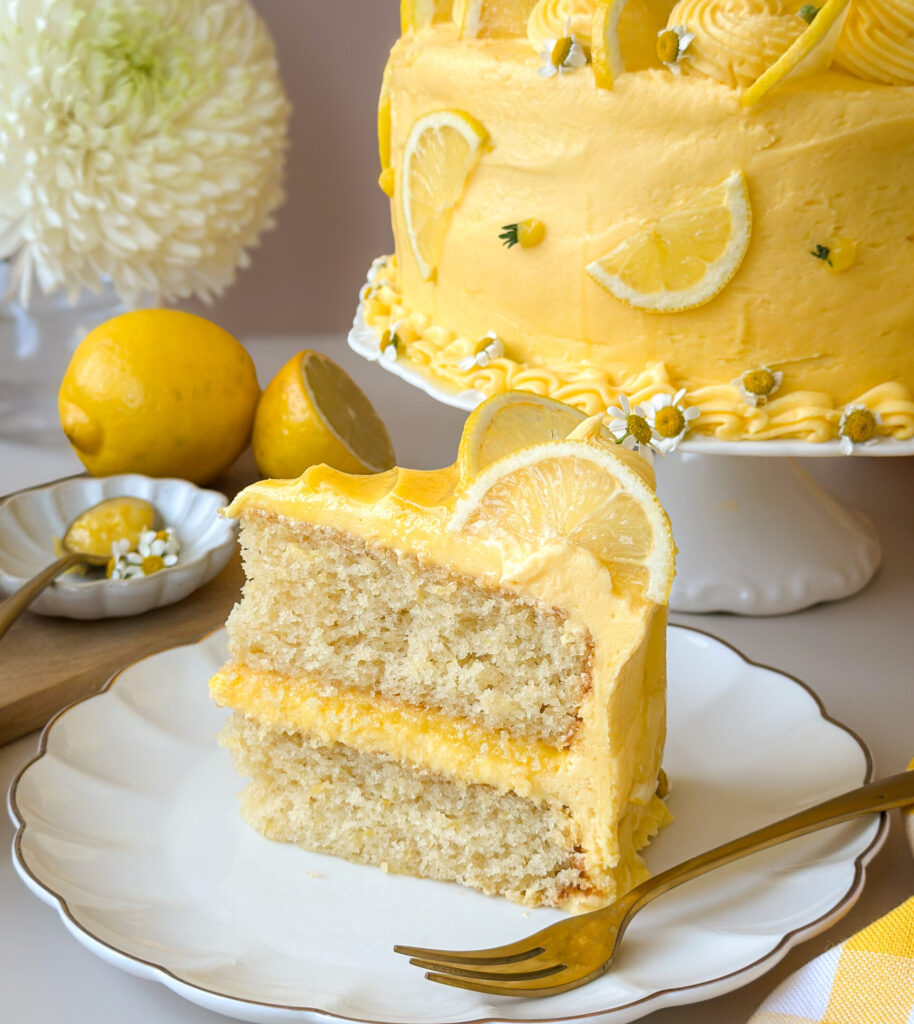
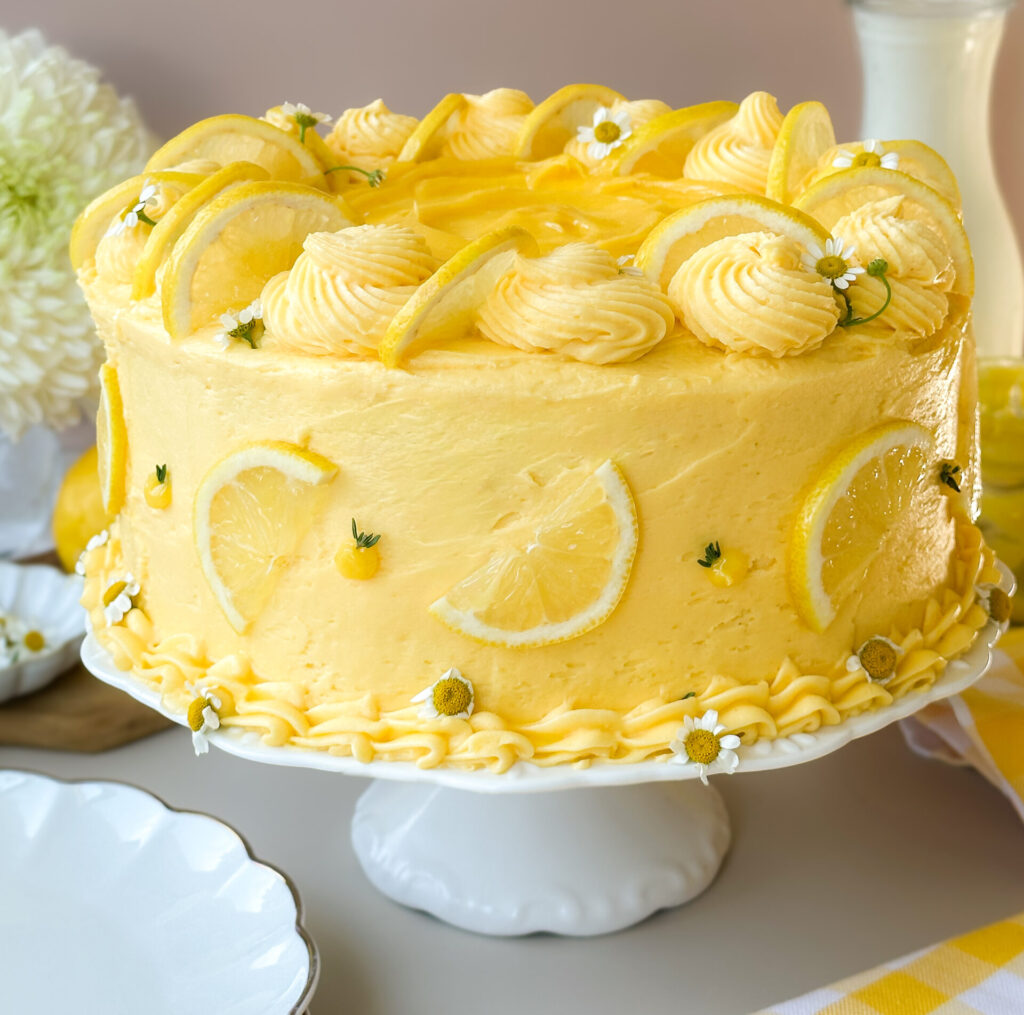
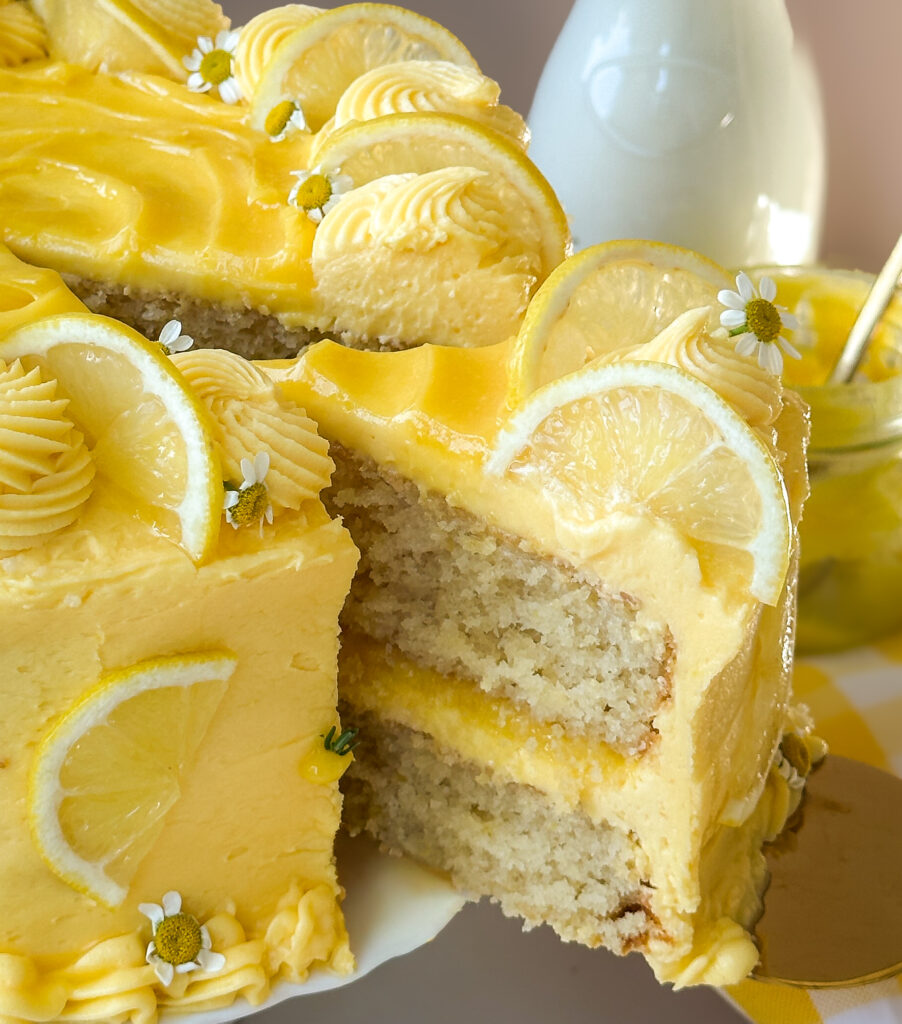
If you’ve been searching for the perfect lemon cake, this Sourdough Lemon Cake is it. Bright, fresh, and made with real lemons, it’s layered with an optional lemon curd and finished with a light, tangy lemon cream cheese frosting. Soft, fluffy, and full of citrus flavor, it tastes like lemon meringue pie… but make a cake.
Table of contents
Why You’ll Love This Recipe
- Soft, fluffy crumb: Tender, plush texture that stays moist without feeling heavy.
- Bright, real lemon flavor: Fresh lemon juice and zest bring real lemon flavor to every bite!
- Optional overnight fermentation: This cake has an optional overnight fermentation step for better digestion and deeper flavor, or you can skip it and bake with discard.
- Tangy lemon frosting: Lemon cream cheese frosting perfectly balances the cake and lemon curd.
- Easy to make: Simple, approachable, and reliable even if you’re new to baking.
Why Use Sourdough Starter in this Sourdough Lemon Cake?
Using sourdough starter/discard in this Sourdough Lemon Cake enhances moisture retention and makes the crumb softer and more tender. The fermentation process also helps break down gluten, making this cake easier to digest for those sensitive to gluten.
Tools You’ll Need:
- Mixing bowls (large and medium)- for mixing batter and frosting. You can also use your stand mixer bowl for the frosting if you wish.
- Whisk- for combining ingredients.
- Kitchen scale (optional)– for accurate measuring, especially helpful with sourdough baking. This is a great kitchen scale for starting out!
- Zester or Microplane- to zest the lemons. I love this zester and reach for it all the time.
- Measuring cups and spoons- if not using a scale and for smaller ingredients.
- Cake pans– two 9-inch round pans or one 9×13-inch pan (I love these 9 inch cake pans with anodized steel for even baking and a perfect exterior).
- Parchment paper- for lining pans. This really helps the cake release cleanly from the pan. Cut a circle to fit the bottom.
- Hand beaters or stand mixer- to whip frosting.
- Cooling rack- for cooling cakes.
- Toothpick or cake tester- to test when cake is done.
- Offset spatula– for spreading frosting on cake.
- Fine-mesh sieve or sifter- for powdered sugar to avoid grainy frosting.
- Pastry bags and decorating tips (optional)– for adding decorations to the cake. If you’re new to cake decoration, this set linked here has pastry bags and an assortment of classic tips to choose from.
- Cake stand or platter– for serving cake. This cake platter is one of my favorites!
Gather Your Ingredients:
- Sourdough starter- (flat or past peak, can be cold or room temperature). Adds depth of flavor and moisture without making this cake “sour”. Key for fermentation.
- All-purpose flour- Gives cake structure and keeps the crumb tender. You can also substitute for cake flour.
- Fresh Lemons- you’ll use both the zest and the juice of the lemons in the cake and the frosting for that bright citrus flavor. I also used lemons to decorate the cake!
- Lemon Extract (optional)- lemon extract in the cake and frosting can help kick up the lemon flavor for the lemon lover’s. I used this lemon extract.
- Buttermilk or milk- Lightens the batter and keeps the crumb soft. I personally highly recommend using buttermilk, the texture and tenderness is so lovely. If you don’t have it though, you can substitute with whole milk.
- White sugar– Sweetens the cake and gives it a golden finish.
- Vanilla extract– Enhances the flavor and brings warmth. Used in the cake and the buttercream.
- Eggs (room temperature)– provide structure and lift with moisture, works as a binder for ingredients.
- Baking powder + Baking soda– Ensures the right rise and tenderness.
- Cornstarch- Creates a softer cake crumb and avoids an oily cake.
- Salt- Balances sweetness and enhances all the other flavors. You’ll need this for the cake and the frosting.
- Avocado Oil- Adds moisture and keeps the cake soft and tender. You can substitute for any neutral cooking oil.
- Unsalted Butter- Used to make the base of the lemon frosting.
- Powdered Sugar- Sweetens and stabilizes the frosting. Do not use granulated sugar or your icing will be grainy.
- Cream Cheese- gives the frosting that tangy light favor. Make sure you use full-fat cream cheese, not cream cheese spread.
- Yellow Food Coloring (optional)- Yellow food coloring is optional, but it does make the frosting a gorgeous yellow. I used this yellow food coloring that is naturally colored and artificial dye free.
- Lemon Curd (optional)- you’ll need one batch of my Easy Lemon Curd Recipe prepped ahead if you’re choosing to add the lemon curd layer and topping.
Instructions
Step 1: Mix The Base
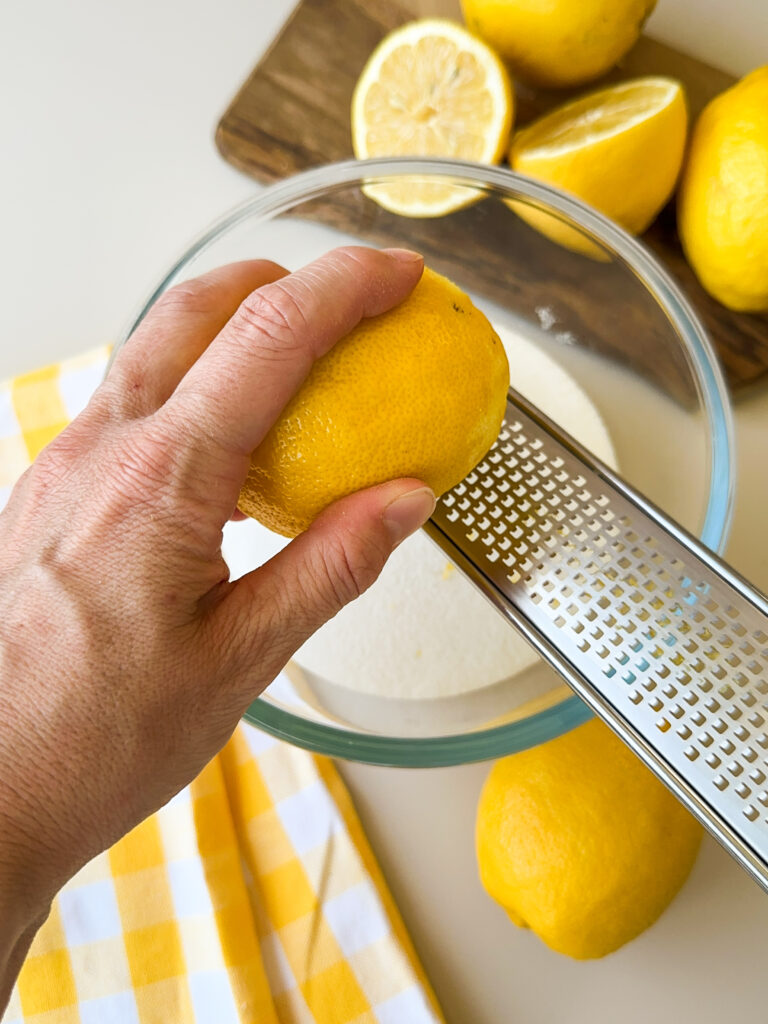
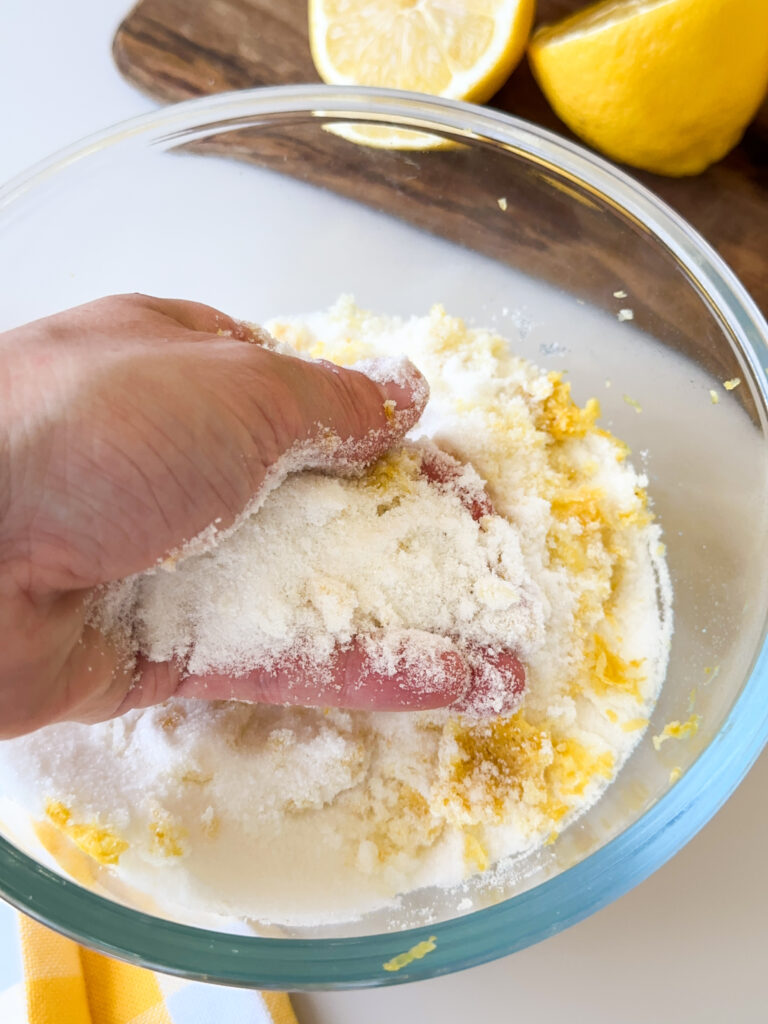
In a mixing bowl, add the white sugar. Using a zester, zest the lemons into the white sugar. Use your fingers to rub the sugar and lemon zest together. This brings out all of the oil in the zest for maximum flavor! The sugar should be slightly damp.
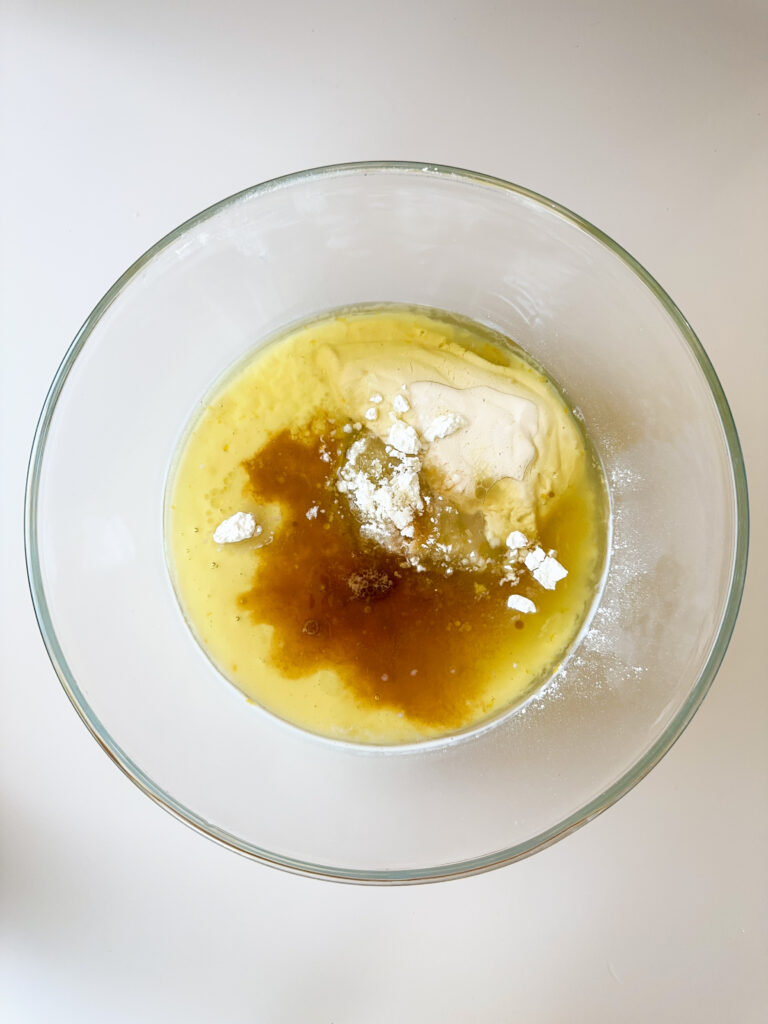
Add the flour, sourdough discard, white sugar, buttermilk or milk, avocado oil (or neutral oil), lemon juice, lemon extract (if using), cornstarch, and the vanilla to the sugar mixture.
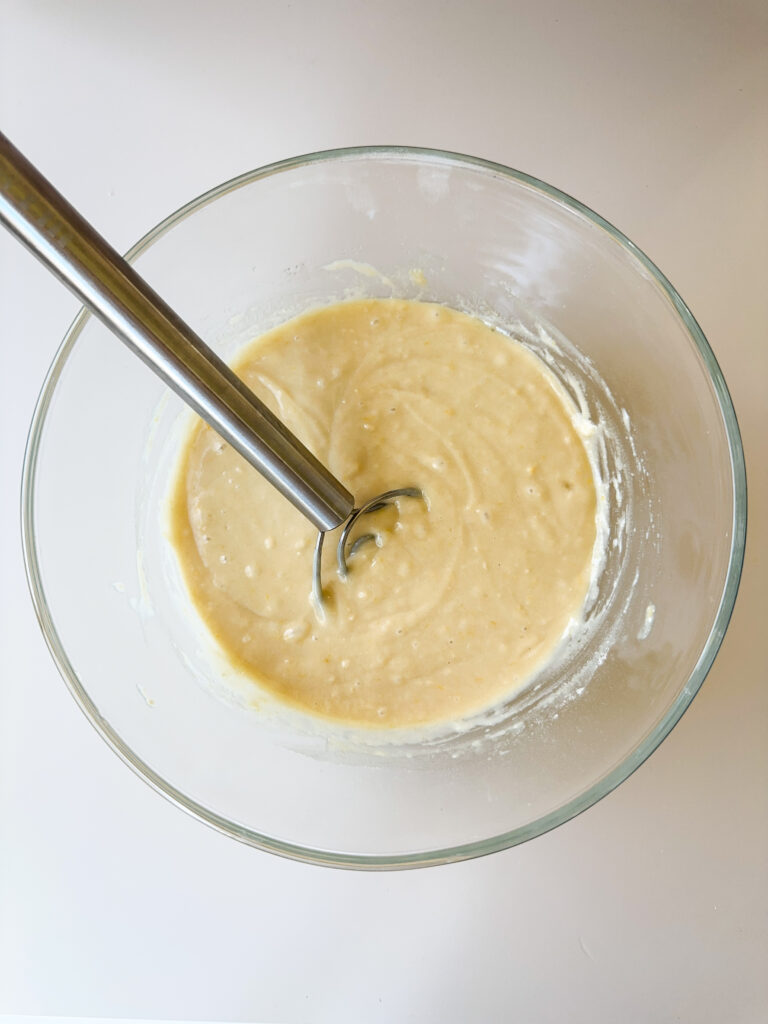
Gently whisk and combine the ingredients in the bowl until generally combined. It’s okay if a few small lumps remain, you don’t want to overmix this base.
Optional Overnight Fermentation: Cover the bowl with plastic wrap, and refrigerate overnight. This step is key in your fermentation process.
If you want to shorten your fermentation time, you can allow the batter to rest for 4 hours at room temperature for a same day bake. I don’t advise leaving this batter at room temperature overnight, its too hydrated and will overproof.
Step 2: Finish Mixing Batter
Overnight Fermentation Continued: If you fermented the batter overnight in the refrigerator, allow the bowl of batter to rest on the counter for roughly 1 hour.
This is a key step to achieving a tender crumb, don’t skip this step! If you like temperature cues, the temperature of the batter should read roughly 70 F before proceeding.
If you allowed batter to rest on the counter and did not refrigerate or you’re doing a quick bake, skip this step of resting.
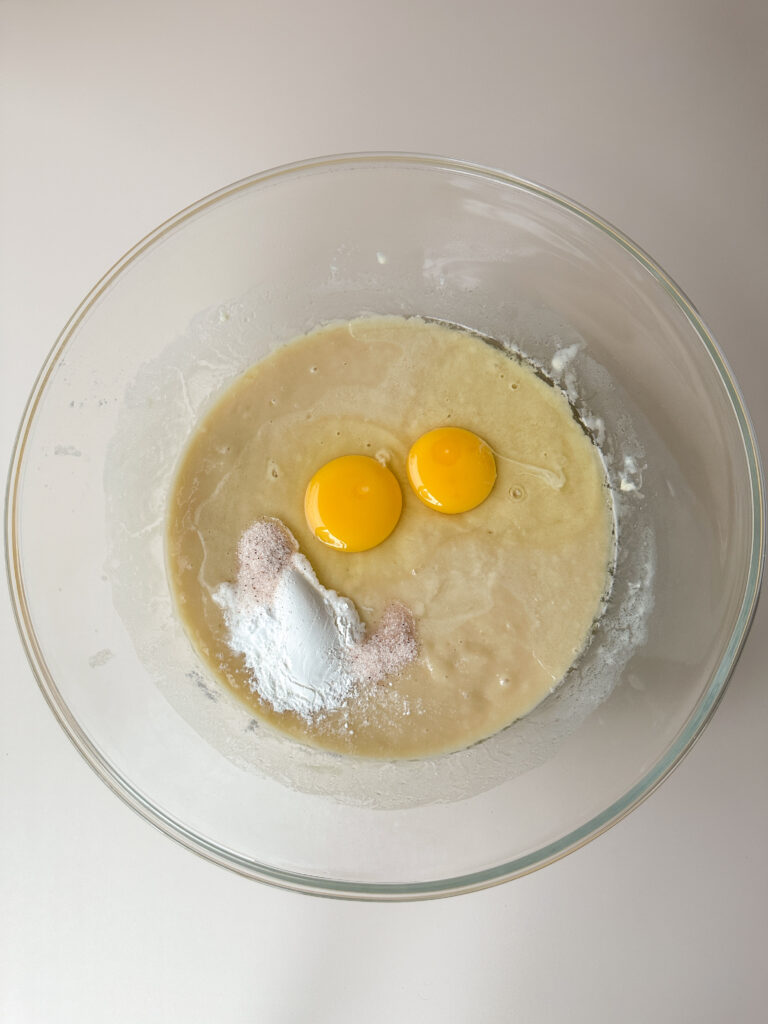
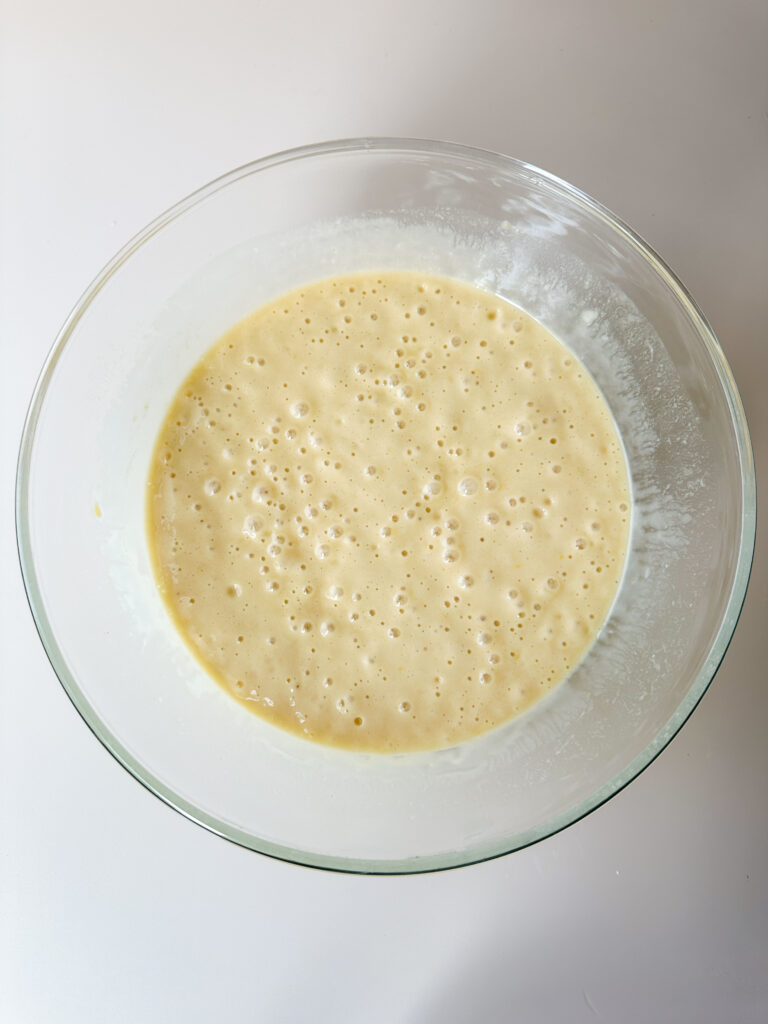
Once the batter has reached room temperature, add the eggs, baking powder, baking soda, and salt to the bowl.
Whisk gently the remaining ingredients into the batter just until combined and smooth, avoiding overmixing to make sure your cake crumb doesn’t get tough.
Step 3: Bake Cakes
Preheat the oven to 350°F (175°C). Grease and lightly flour two 9-inch pans or one 9×13 baking pan. I strongly recommend lining the very bottom of the pan with parchment paper at this time, this helps the cake release evenly and the lemon juice can cause this cake to stick.
Baker’s Tip: If you aren’t sure how to line the bottom of your cake pan with parchment, simply place your cake pan on a sheet of parchment and draw along the edge to form the shape you need. Cut and place at the bottom of your pan.
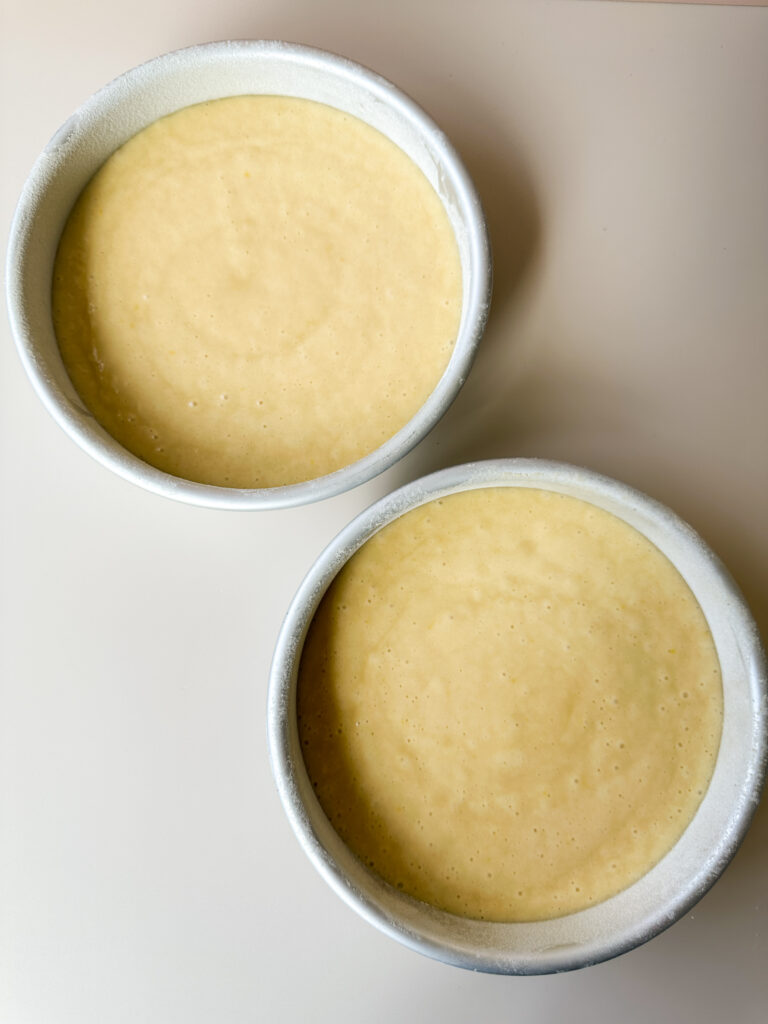
If you’re using 2 9-inch cake pans, divide batter evenly between the two pans. This should roughly be 2 1/2 cups (550g) batter per 9-inch pan.
If using a sheet pan, pour all of the batter into the pan. See details on frosting sheet cake under FAQ’s.
Tap the pans lightly on a hard surface to release any air bubbles before baking.
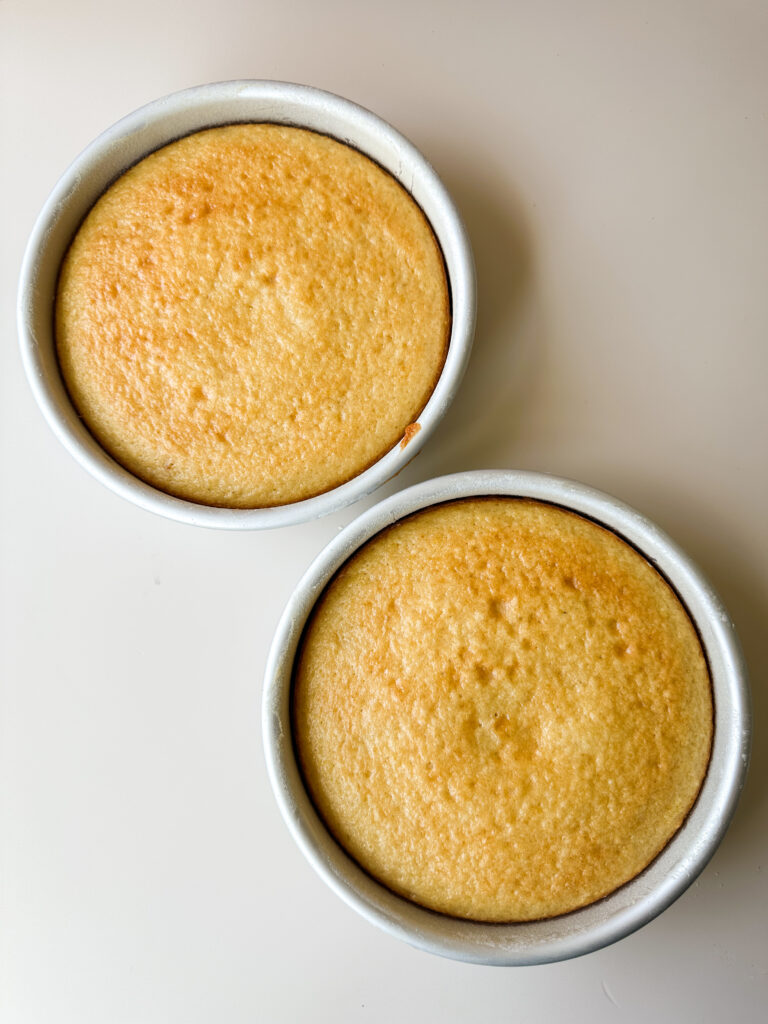
Set your timer for 25 minutes. Check the cake at 25 minutes, inserting a toothpick to check doneness. This cake takes me anywhere between 25-30 minutes to be done. When the cake is done, a toothpick should come out with a few moist crumbs but not with wet batter.
When you touch the top of the center of the cake, it should be firm and not overly glossy. Internal temperature should be between 200-205 F in the center.
Note: If lemon cake is under done, when cake is removed from heat the center will fall. If you overbake the cake, it will err on the side of being dry.
Go slow and check frequently after the 25 minute mark to ensure the cake is baked properly without losing moisture. Use the notes above to make sure cake is baked correctly.
When cakes are done, cool slightly in pans then turn out onto racks. This cake is slightly sticky, so for a clean release use a frosting spatula to release the edges before turning the cakes out on cooling racks.
I like to line my cooling racks with parchment so the cakes release easily. Allow the cakes to cool completely.
If desired, trim any uneven tops after the cakes cool. Wrap the cakes in plastic and freeze if you’ll be waiting to frost the cakes, otherwise a short chill in the refrigerator also works great if you’re making this cake same day.
Step 4: Make the Lemon Cream Cheese Frosting
Make sure your butter and cream cheese are fully softened and room temperature before proceeding with the frosting, or the frosting will be grainy.
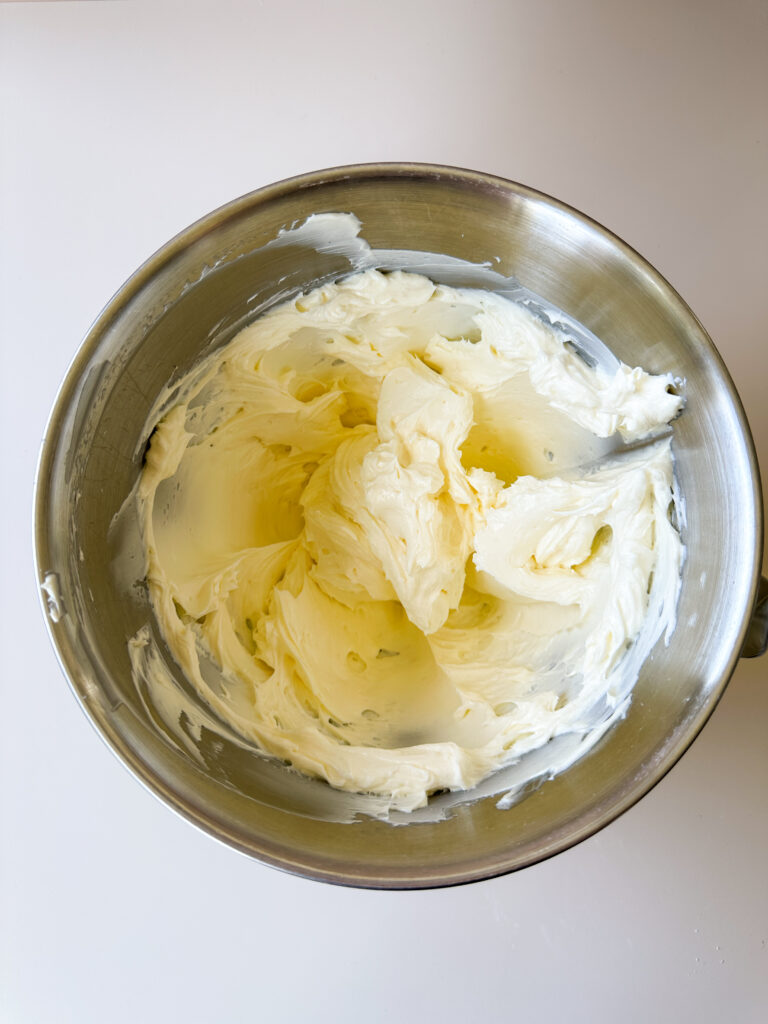
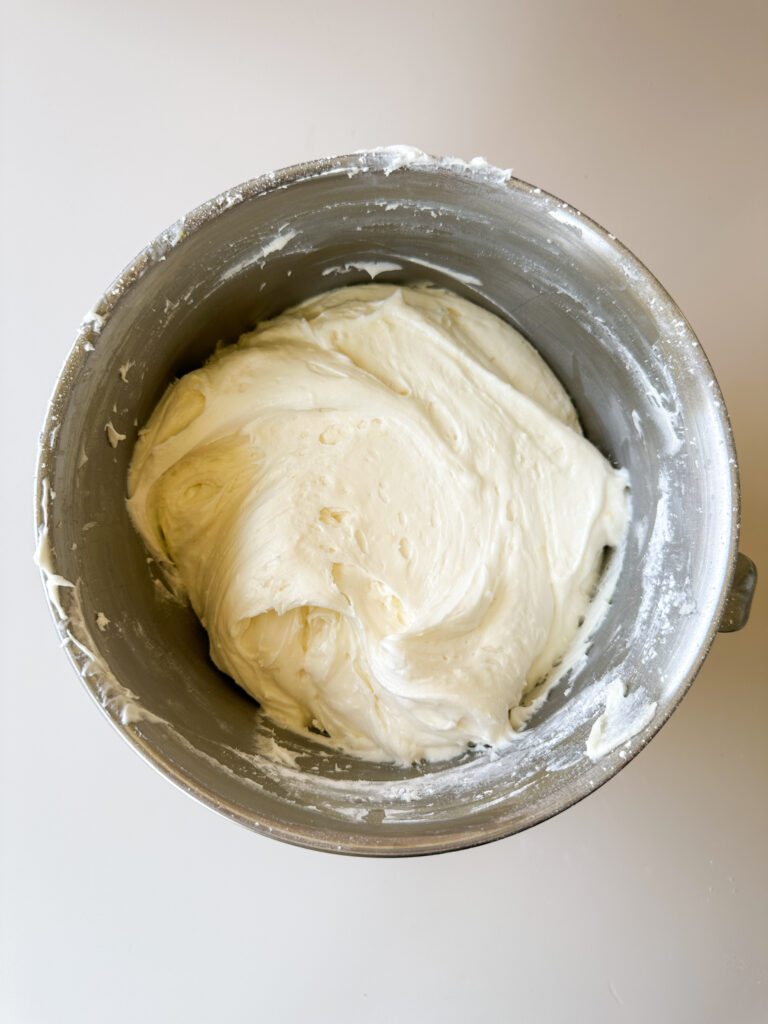
In a stand mixer or a large bowl, add your butter and cream cheese. Cream on high for 3-4 minutes until pale and fluffy.
Add half the sifted powdered sugar, lemon zest, lemon juice, vanilla extract, lemon extract (if using), and salt to the frosting. Beat on low to incorporate. Once the ingredients are mixed in, whip the frosting on high for a minute or two until the frosting is smooth.
Add the remaining half of the sifted powdered sugar to the bowl, and mix on low to incorporate into the frosting. Increase the speed to high again, and whip the frosting until it’s light and fluffy (about 3-4 minutes).
At this point if you want to color the frosting, add 1/2 teaspoon of the yellow food coloring at a time mixing it in until you achieve the color you like.
I recommend a short chill if the frosting for 15-20 minutes to help it set up in the refrigerator. If it feels too stiff after, you can beat it again to help loosen it up.
Step 5: Assemble and Frost the Cake
Note: If you’re going to add the lemon curd filling and topping, please make sure you head over and prepare 1 batch of my Easy Lemon Curd Recipe in advance and chill it in preparation for assembling the cake.
Remove cakes from the freezer, and place 1 cake upside down on cake stand or plate.
I like to put a dollop of icing on the cake stand first to help the cake stick to the stand. Use the lemon cream cheese frosting to frost the 1st layer of cake.
When the first layer of cake is smoothly covered in frosting, you can pipe a rim around the edge of the 1st layer of cake to help hold your lemon curd in the filling. This is very helpful if you’re going to be adding the lemon curd filling.
Just transfer some frosting to a Ziplock or pastry bag, and snip 1/2 inch of the tip off the end of the bag and pipe a ring around the top of the frosted 1st layer.
Make sure your lemon curd is a spreadable consistency (see notes on the lemon curd recipe for this). Spread half of your lemon curd into the center of the cake, spreading it to the edges.
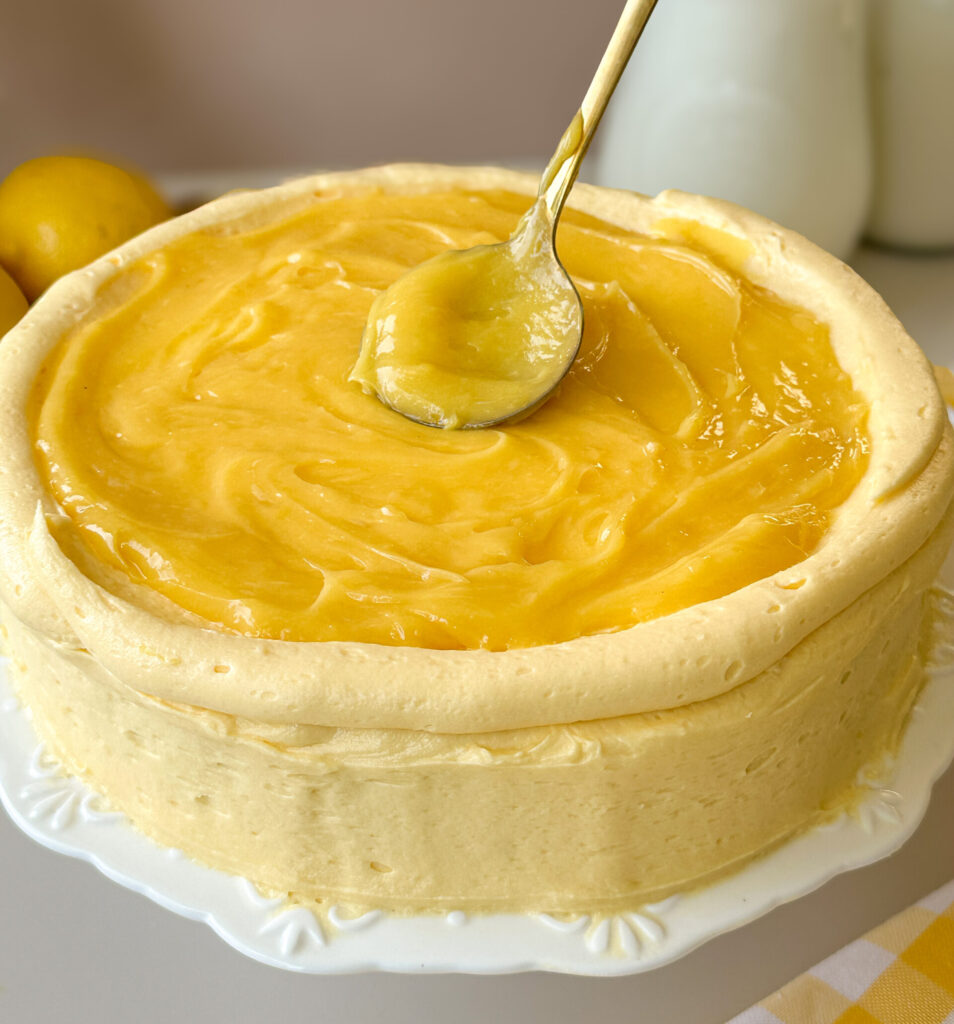
Chill the cake for at least 15 minutes to allow the frosting and the curd to setup before adding the second cake layer.
After chilling, place the second layer upside down on top of the lemon curd layer. Use remaining frosting to cover the top and sides of the second layer, leaving some left over frosting if you want to pipe any decorative details.
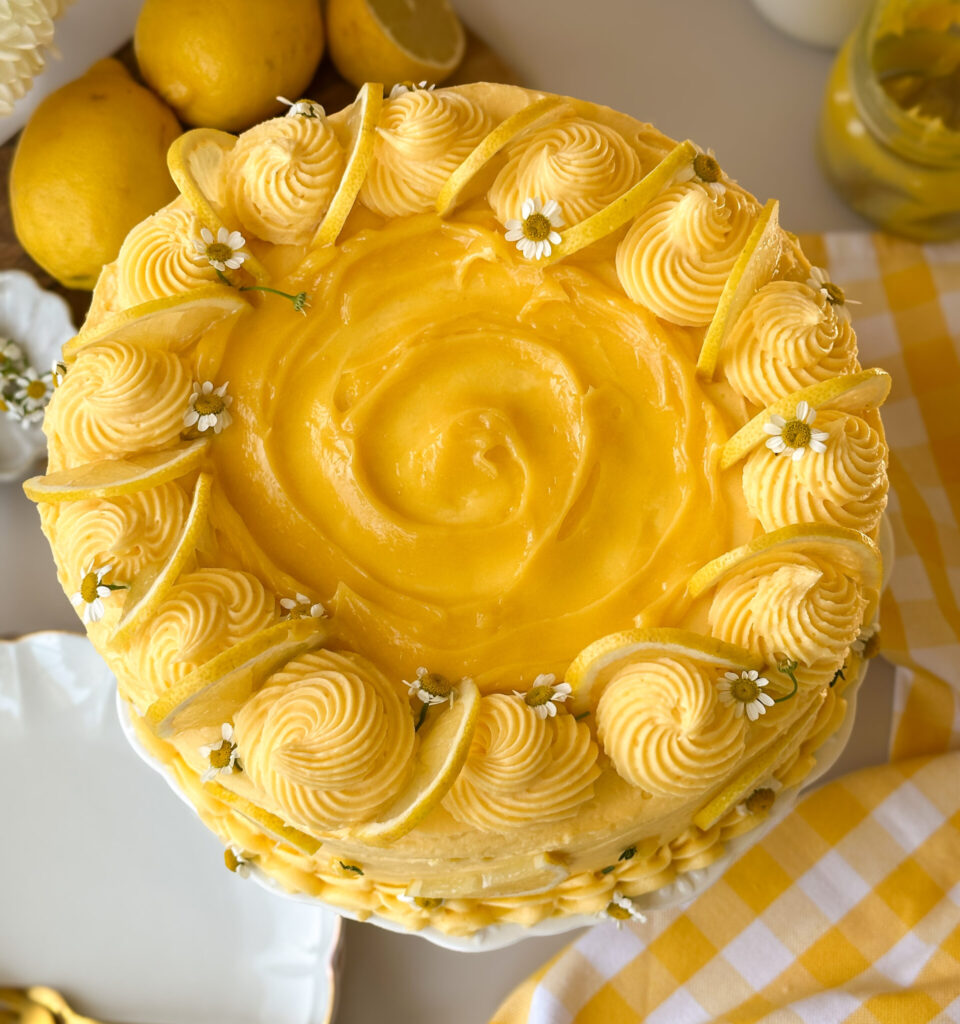
I piped swirls around the top and bottom edge of my cake and added thinly sliced lemons and edible flowers for extra decorations.
Add the remaining lemon curd to the top of the cake, and spread it out to the decorative edges. You can even use some lemon curd to pipe little dots and add sprigs of thyme for an extra festive touch!
Make sure you chill this cake for at least 30 minutes prior to slicing to allow the frosting and curd to fully set for the cleanest slices.
Slice cake and serve!
Yields 2 tier layered cake (serves 10-12)
How to Store:
Room Temperature– store at room temperature in airtight container or stand with lid for up to 1 day. Because of the cream cheese in the frosting and the eggs in the curd, this cake is best refrigerated.
Refrigerator– store in airtight container for up to 5 days. Bring to room temperature before serving.
Freezer– Wrap unfrosted cakes tightly in plastic, freeze up to 2 months. Thaw overnight in refrigerator when ready to use. Assemble and frost cake as directed and serve.
FAQ’S
No. If you want to bake the cake the same day, just follow the directions to mix and simply bake the cake.
The flour may have been packed in the measuring cup OR the batter was overmixed. Make sure to gently mix!
Nope! I made this recipe so you can skip it if you like and just make the cake and frosting.
Yes! This batter is enough for a 9×13 cake pan. I still recommend lining the pan with parchment to avoid sticking. I would also cut the frosting in half for a 9×13 cake as this recipe is designed to cover a 2 tier 9 inch cake. You can still add lemon curd, I would just add it all to the top of the frosted cake and swirl it in to the frosting!
If you can’t get fresh lemons, you can use bottled lemon juice and lemon extract.
Yes! You can make this into a simple lemon buttercream by swapping the cream cheese for an additional 1/2 (113g) cup softened unsalted butter. I would also reduced the powdered sugar to 4 1/2 cups (550g).
Drop a comment and leave a star review if you loved this recipe, and don’t forget to try more of my sourdough cake recipes!
Sourdough Cake Recipes:
- Sourdough Brown Butter Carrot Cake
- Sourdough Chocolate Cake
- Sourdough Vanilla Cake (moist and fluffy!)

Sourdough Lemon Cake
Equipment
- Mixing bowls (large and medium) – for mixing batter and frosting. You can also use your stand mixer bowl for the frosting if you wish.
- Whisk – for combining ingredients.
- Kitchen scale (optional) – for accurate measuring, especially helpful with sourdough baking. This is a great kitchen scale for starting out!
- Zester or Microplane – to zest the lemons. I love this zester and reach for it all the time.
- Measuring cups and spoons – if not using a scale and for smaller ingredients.
- Cake pans – two 9-inch round pans or one 9×13-inch pan (I love these9 inch cake pans with anodized steel for even baking and a perfect exterior).
- Parchment paper – for lining pans. This really helps the cake release cleanly from the pan. Cut a circle to fit the bottom.
- Hand beaters or stand mixer – to whip frosting.
- Cooling rack – for cooling cakes.
- Toothpick or cake tester – to test when cake is done.
- Offset spatula – for spreading frosting on cake.
- Fine-mesh sieve or sifter – for powdered sugar to avoid grainy frosting.
- Pastry bags and decorating tips (optional) – for adding decorations to the cake. If you're new to cake decoration, this set linked here has pastry bags and an assortment of classic tips to choose from.
- Cake stand or platter – for serving cake. This cake platter is one of my favorites!
Ingredients
Sourdough Lemon Cake:
- 1/2 (120g) cup sourdough discard
- 1/2 tsp lemon extract optional
- 1 1/2 (300g) cups granulated white sugar
- 2 Tbsp lemon zest or two lemons zested
- 1/4 (50g) cup fresh lemon juice
- 1 (240g) cup buttermilk or whole milk
- 1/2 (140g) cup avocado oil or neutral oil
- 2 1/4 (280g) cups all-purpose flour
- 1/2 (8g) Tbsp cornstarch
- 2 tsp vanilla extract
- 2 large eggs
- 1 Tbsp baking powder
- 3/4 tsp baking soda
- 3/4 tsp salt
Lemon Cream Cheese Frosting:
- 1/2 (113g) cup unsalted butter softened
- 8 (225g) oz cream cheese softened
- 5 1/3 (650g) cup powdered sugar sifted
- 1/4 tsp lemon extract optional
- 1 (15g) Tbsp lemon juice
- 1 tsp lemon zest
- 1 tsp vanilla extract
- 1/8 tsp salt
Lemon Curd:
- 1 batch Easy Lemon Curd Recipe if you're filling the cake
Instructions
Step 1: Mix The Base
- In a mixing bowl, add the white sugar. Using a zester, zest the lemons into the white sugar. Use your fingers to rub the sugar and lemon zest together. This brings out all of the oil in the zest for maximum flavor! The sugar should be slightly damp.1 1/2 (300g) cups granulated white sugar, 2 Tbsp lemon zest
- Add the flour, sourdough discard, white sugar, buttermilk or milk, avocado oil (or neutral oil), lemon juice, lemon extract (if using), cornstarch and the vanilla to the sugar mixture.1/2 (120g) cup sourdough discard, 1/2 tsp lemon extract, 1/4 (50g) cup fresh lemon juice, 1 (240g) cup buttermilk, 1/2 (140g) cup avocado oil , 2 1/4 (280g) cups all-purpose flour, 1/2 (8g) Tbsp cornstarch, 2 tsp vanilla extract
- Gently whisk and combine the ingredients in the bowl until generally combined. It’s okay if a few small lumps remain, you don’t want to overmix this base.
- Optional Overnight Fermentation: Cover the bowl with plastic wrap, and refrigerate overnight. This step is key in your fermentation process.
- If you want to shorten your fermentation time, you can allow the batter to rest for 4 hours at room temperature for a same day bake. I don’t advise leaving this batter at room temperature overnight, its too hydrated and will overproof.
Step 2: Finish Mixing Batter
- Overnight Fermentation Continued: If you fermented the batter overnight in the refrigerator, allow the bowl of batter to rest on the counter for roughly 1 hour.
- This is a key step to achieving a tender crumb, don’t skip this step! If you like temperature cues, the temperature of the batter should read roughly 70 F before proceeding.
- If you allowed batter to rest on the counter and did not refrigerate or you’re doing a quick bake, skip this step of resting.
- Once the batter has reached room temperature, add the eggs, baking powder, baking soda, and salt to the bowl.2 large eggs, 1 Tbsp baking powder, 3/4 tsp salt, 3/4 tsp baking soda
- Whisk gently the remaining ingredients into the batter just until combined and smooth, avoiding overmixing to make sure your cake crumb doesn’t get tough.
Step 3: Bake Cakes
- Preheat the oven to 350°F (175°C). Grease and lightly flour two 9-inch pans or one 9×13 baking pan. I strongly recommend lining the very bottom of the pan with parchment paper at this time, this helps the cake release evenly and the lemon juice can cause this cake to stick.
- Baker's Tip: If you aren't sure how to line the bottom of your cake pan with parchment, simply place your cake pan on a sheet of parchment and draw along the edge to form the shape you need. Cut and place at the bottom of your pan.
- If you're using 2 9-inch cake pans, divide batter evenly between the two pans. This should roughly be 2 1/2 cups (550g) batter per 9-inch pan. Tap the pans lightly on a hard surface to release any air bubbles before baking.
- If using a sheet pan, pour all of the batter into the pan. See details on frosting sheet cake under FAQ's.
- Set your timer for 25 minutes. Check the cake at 25 minutes, inserting a toothpick to check doneness. This cake takes me anywhere between 25-30 minutes to be done. When the cake is done, a toothpick should come out with a few moist crumbs but not with wet batter.
- When you touch the top of the center of the cake, it should be firm and not overly glossy. Internal temperature should be between 200-205 F in the center.
- Note: If lemon cake is under done, when cake is removed from heat the center will fall. If you overbake the cake, it will err on the side of being dry.
- Go slow and check frequently after the 25 minute mark to ensure the cake is baked properly without losing moisture. Use the notes above to make sure cake is baked correctly.
- When cakes are done, cool slightly in pans then turn out onto racks. This cake is slightly sticky, so for a clean release use a frosting spatula to release the edges before turning the cakes out on cooling racks.
- I like to line my cooling racks with parchment so the cakes release easily. Allow the cakes to cool completely.
- If desired, trim any uneven tops after the cakes cool. Wrap the cakes in plastic and freeze if you’ll be waiting to frost the cakes, otherwise a short chill in the refrigerator also works great if you’re making this cake same day.
Step 4: Make the Lemon Cream Cheese Frosting
- Make sure your butter and cream cheese are fully softened and room temperature before proceeding with the frosting, or the frosting will be grainy.1/2 (113g) cup unsalted butter, 8 (225g) oz cream cheese
- In a stand mixer or a large bowl, add your butter and cream cheese. Cream on high for 3-4 minutes until pale and fluffy.
- Add half the sifted powdered sugar, lemon zest, lemon juice, vanilla extract, lemon extract (if using), and salt to the frosting. Beat on low to incorporate. Once the ingredients are mixed in, whip the frosting on high for a minute or two until the frosting is smooth.5 1/3 (650g) cup powdered sugar, 1/4 tsp lemon extract, 1 (15g) Tbsp lemon juice, 1 tsp lemon zest, 1 tsp vanilla extract, 1/8 tsp salt
- Add the remaining half of the sifted powdered sugar to the bowl, and mix on low to incorporate into the frosting. Increase the speed to high again, and whip the frosting until it’s light and fluffy (about 3-4 minutes).
- At this point if you want to color the frosting, add 1/2 teaspoon of the yellow food coloring at a time mixing it in until you achieve the color you like.
- I recommend a short chill if the frosting for 15-20 minutes to help it set up in the refrigerator. If it feels too stiff after, you can beat it again to help loosen it up.
Step 5: Assemble and Frost the Cake
- Note: If you're going to add the lemon curd filling and topping, please make sure you head over and prepare 1 batch of my Easy Lemon Curd Recipe in advance and chill it in preparation for assembling the cake.1 batch Easy Lemon Curd Recipe
- Remove cakes from the freezer, and place 1 cake upside down on cake stand or plate.
- I like to put a dollop of icing on the cake stand first to help the cake stick to the stand. Use the lemon cream cheese frosting to frost the 1st layer of cake.
- When the first layer of cake is smoothly covered in frosting, you can pipe a rim around the edge of the 1st layer of cake to help hold your lemon curd in the filling. This is very helpful if you’re going to be adding the lemon curd filling.
- Just transfer some frosting to a Ziplock or pastry bag, and snip 1/2 inch of the tip off the end of the bag and pipe a ring around the top of the frosted 1st layer.
- Make sure your lemon curd is a spreadable consistency (see notes on the lemon curd recipe for this). Spread half of your lemon curd into the center of the cake, spreading it to the edges.
- Chill the cake for at least 15 minutes to allow the frosting and the curd to setup before adding the second cake layer.
- After chilling, place the second layer upside down on top of the lemon curd layer. Use remaining frosting to cover the top and sides of the second layer, leaving some left over frosting if you want to pipe any decorative details.
- I piped swirls around the top and bottom edge of my cake and added thinly sliced lemons and edible flowers for extra decorations.
- Add the remaining lemon curd to the top of the cake, and spread it out to the decorative edges. You can even use some lemon curd to pipe little dots and add sprigs of thyme for an extra festive touch!
- Make sure you chill this cake for at least 30 minutes prior to slicing to allow the frosting and curd to fully set for the cleanest slices.
- Slice cake and serve!
- Yields 2 tier layered cake (serves 10-12)
10/10 delicious!!
The lemon curd ftw
A lot of steps but great result
Here’s the thing, I ate a slice in the evening before bed. I woke up still thinking about this cake the next morning! It’s that good!