
Sourdough Discard Burger Buns
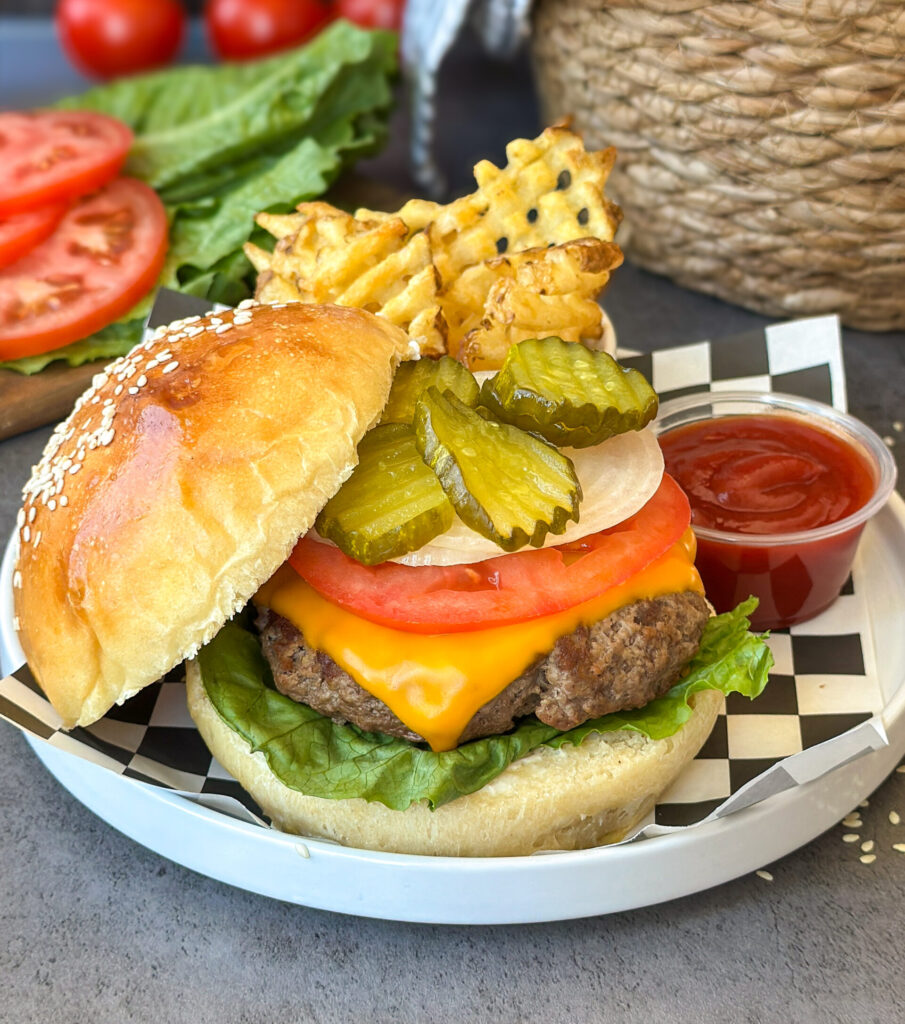
Once you make homemade burger buns, there is no going back. These Sourdough Discard Burger Buns are soft, fluffy, and sturdy enough to hold the juiciest burgers. The sourdough discard adds incredible flavor, while yeast keeps them quick and easy enough for a weeknight dinner. After these, I don’t think I’ll go out for burgers again.
Looking for a fully sourdough option? Try my Sourdough Burger Buns (same day recipe)!
Why You’ll Love This Recipe
- Uses up discard: A delicious and easy way to put extra sourdough discard to use.
- Soft for days: The milk, butter, and oil in these buns keep them pillowy soft for long after baking.
- No long rise: A little yeast gives you fluffy buns in just a few hours so you aren’t waiting all day.
- Better than store bough: the rich flavor and pillowy crumb on these buns will have you spoiled for good.
- Versatile and easy: These buns are simple to make and work great for juicy burgers, pulled pork sandwiches, and all your summer BBQ favorites.
Tools You’ll Need:
- Large mixing bowl or stand mixer bowl- for mixing your dough.
- Stand Mixer (optional)- for mixing dough.
- Digital kitchen scale (optional)– for accurate measuring, especially helpful with sourdough baking. I linked the one I like here.
- Measuring cups and spoons– for measuring ingredients.
- Whisk- to combine ingredients.
- Bench Knife- to cut dough into desired sizes. I love this one linked here.
- Pastry Brush- to brush buns with egg wash (you can also use a folded paper towel).
- Baking Sheets- for baking the buns.
- Parchment Paper- for lining the baking sheet.
- Kitchen thermometer (optional)- helpful for checking internal temperatures. This is my go-to kitchen thermometer.
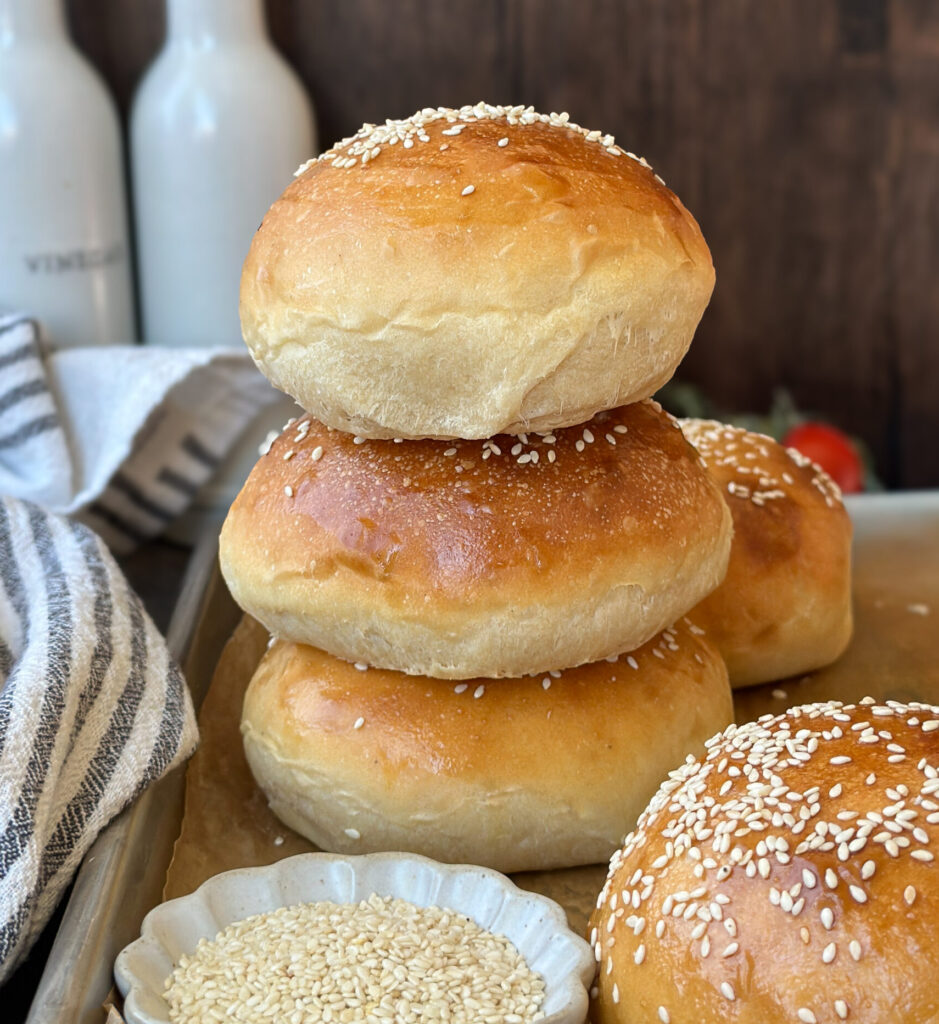
Gather Your Ingredients:
- Sourdough discard- (cold or room temperature). Adds amazing flavor to the buns.
- Instant dry yeast- This is the leavening agent for the dough, and speeds up the process! I love this Scratch Gold Yeast and always have it on hand. Please note instant dry yeast isn’t the same as active dry yeast which you have to bloom to activate. I’ll include an active dry yeast swap under FAQ’s.
- Bread flour– Higher protein flour supports the rich dough and creates a mores structured bun. All-purpose flour can be used for a a softer bun if you prefer.
- Whole Milk– Adds moisture and softness to the crumb.
- Water– Gives the buns a light and fluffy crumb.
- White granulated sugar- Sweetens the buns and gives them a golden finish.
- Egg– Enriches the dough and adds structure and softness. You’ll also need egg of the egg wash.
- Unsalted Butter- Make the dough tender and flavorful.
- Avocado Oil- Extends the shelf life of the buns. You can substitute for any neutral cooking oil.
- Salt– Balances sweetness and strengthens gluten.
- Sesame Seeds (optional)– Adds texture to buns and a nutty flavor. Gives buns traditional hamburger bun appearance.
Instructions
Step 1: Mix the Dough
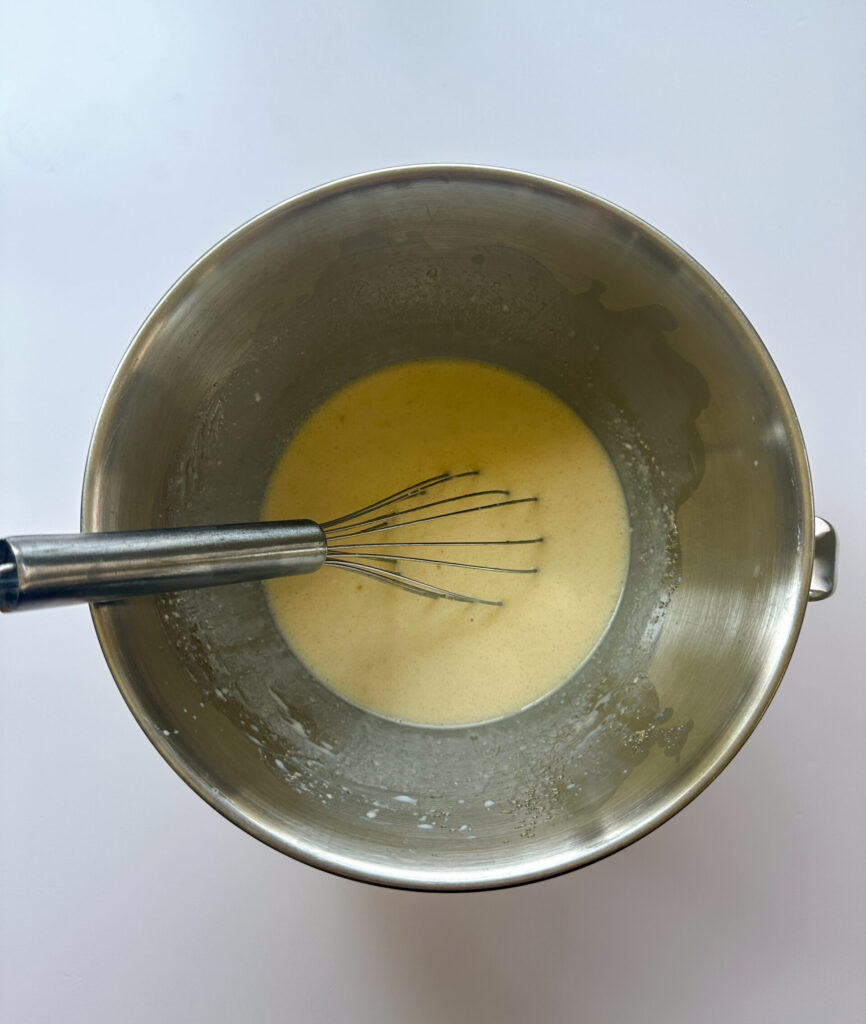
In a large bowl or the bowl of your stand mixer, add the sourdough discard, whole milk, warm water, sugar, egg, oil, and yeast. Whisk until everything is loosely combined, a few lumps are okay.
After you combine the wet ingredients, add the bread flour and salt to the bowl.
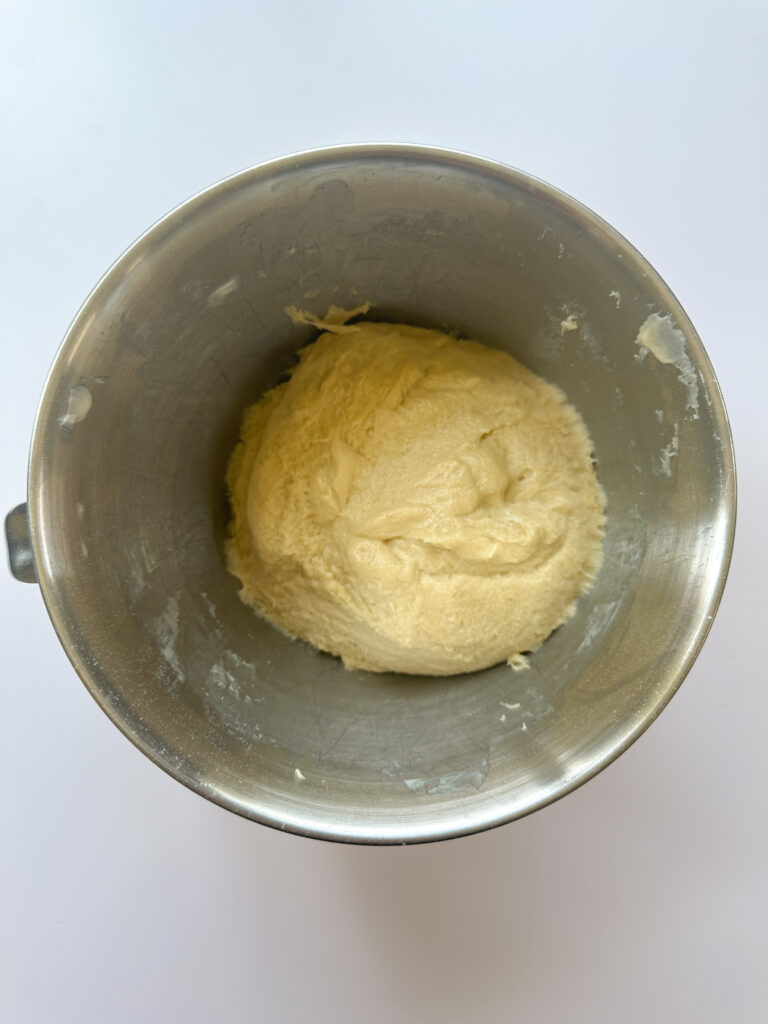
Mixing by hand: If you’re mixing this dough by hand, mix and knead the dough together until it’s a shaggy ball. This should take about 5 minutes.
Add the butter by the Tablespoon and knead it slowly into the dough until incorporated. This should take another five minutes.
Mixing with a stand mixer: If you’re using a stand mixer, knead the dough on the lowest setting for 5 minutes, scraping the bowl halfway through to make sure everything is incorporated.
Add the butter by the Tablespoon into the dough with the mixer on low speed, until all of the butter is worked into the dough. This should take about another five minutes.
Once the dough is mixed, grease a bowl or container large enough for the dough to double with cooking spray and transfer the dough to the container. Cover the dough with plastic or a lint-free towel, and allow the dough to rest 20 minutes.
After 20 minutes, perform one set of stretch and folds to work the dough to strengthen the gluten.
How to do a stretch and fold: Starting at the edge of the dough with lightly wet hands, gently lift one edge of the dough, stretch it up, and fold it over the center. Rotate the bowl or container 90 degrees and repeat with the next side. Do this for all four sides of the dough to form a ball.
Step 2: Bulk Fermentation
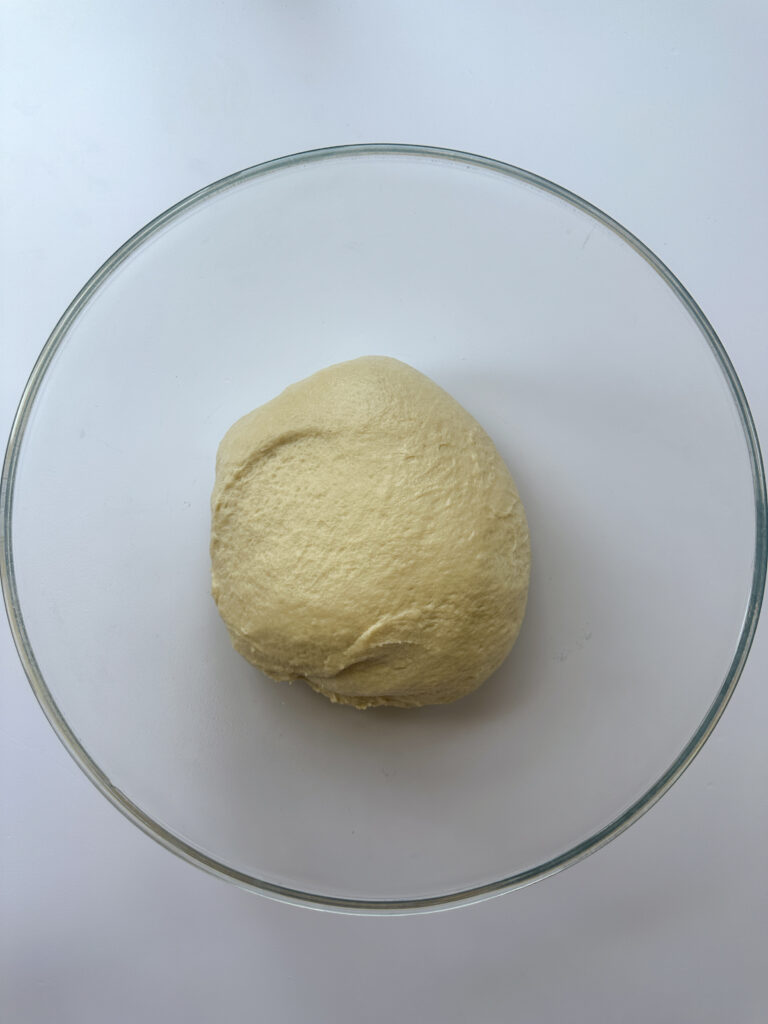
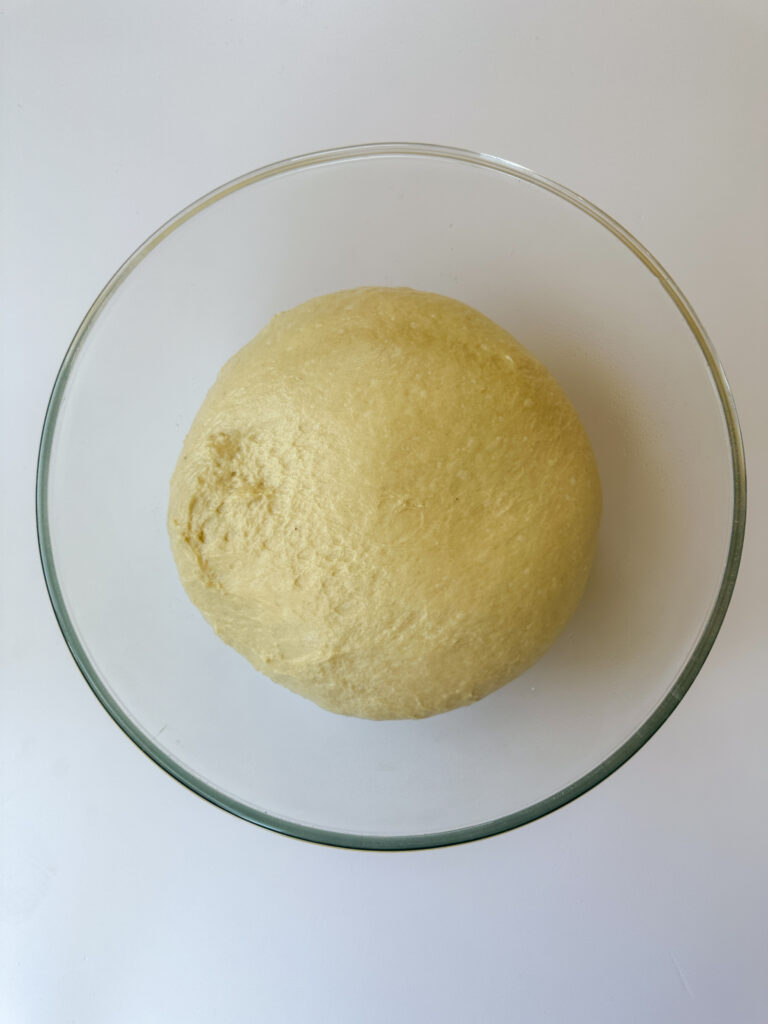
Cover the dough and allow it to rest in a warm spot until it has reached a 90 percent rise.
Note on Temperature: Your dough loves a warmer climate, so aim to keep your dough between 73-78 degrees (you can use your digital thermometer to check the temperature).
Step 3: Shape the BUNS
Turn the dough out onto a lightly floured or oiled surface. Divide into 8 equal portions (about 140-150g each).
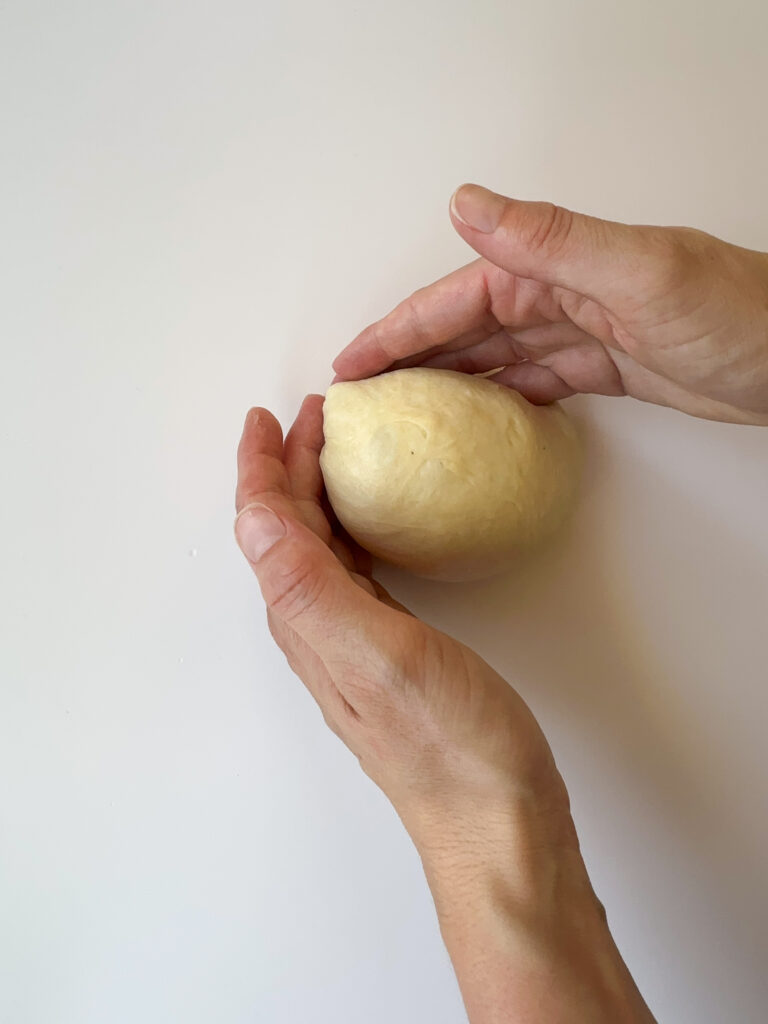
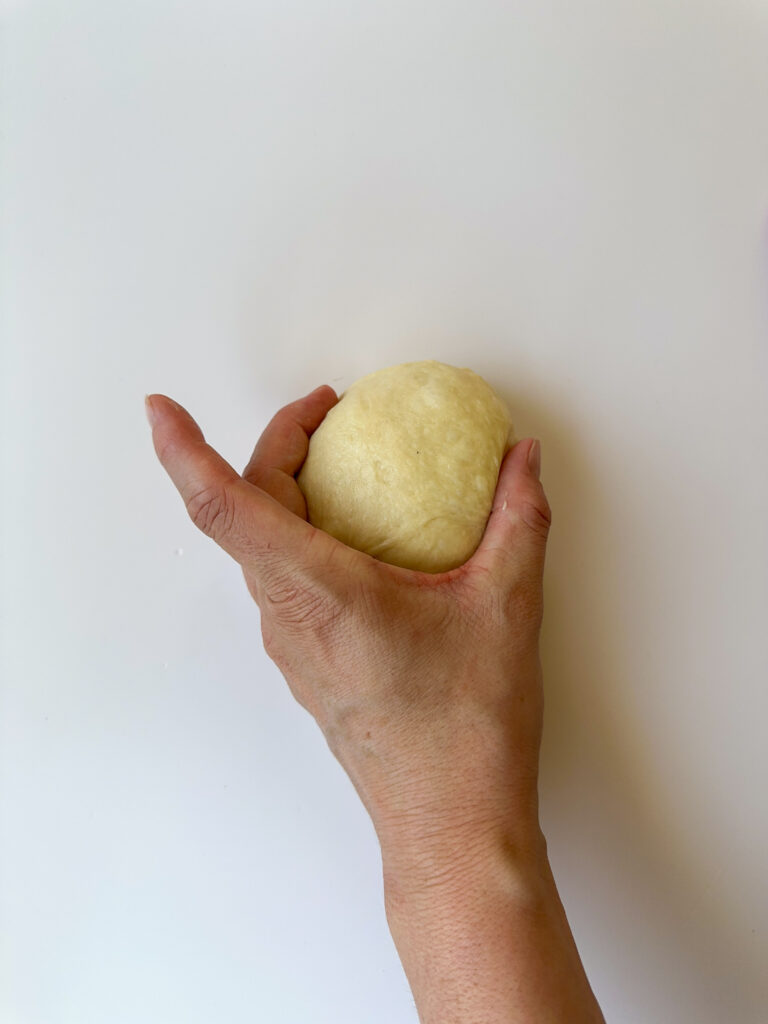
Shape each section of dough into a tight ball by cupping your hand and rolling it on the counter in a circular motion.
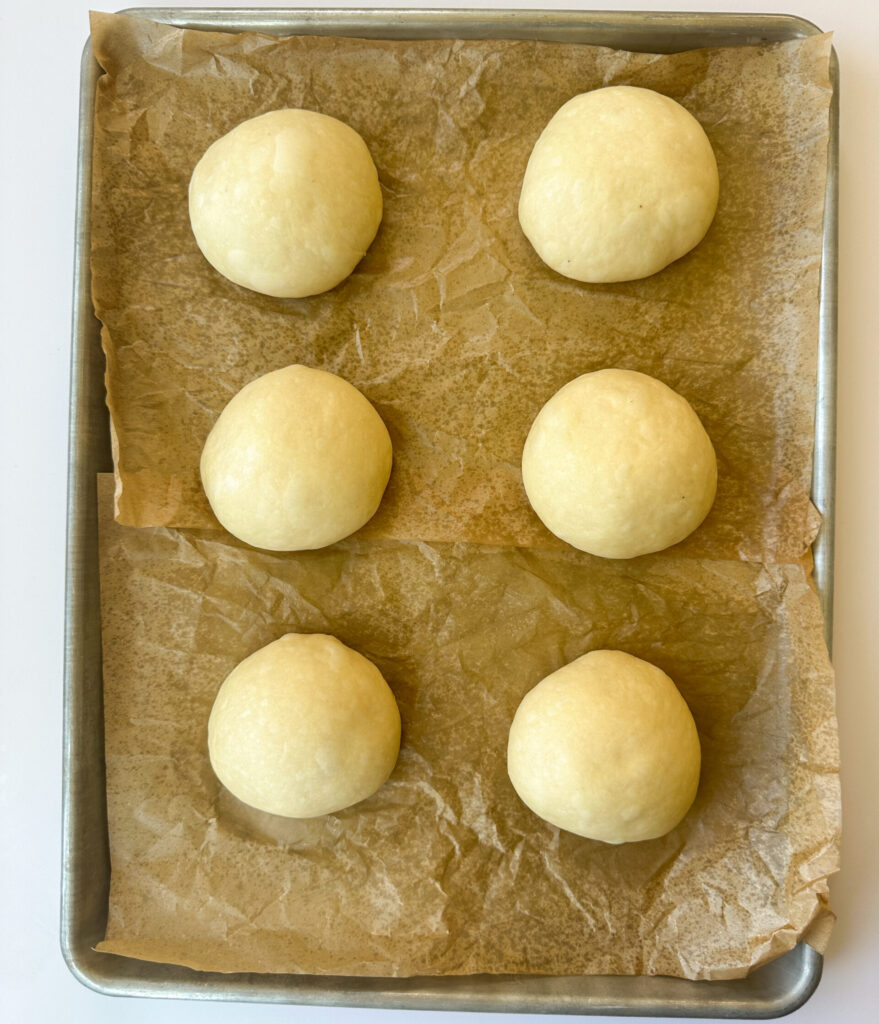
Transfer the dough balls to a baking sheet lined with parchment or a silicone mat, spacing the buns evenly. I usually do 4-6 buns per baking sheet so they have plenty of space.
Cover the trays of buns with a damp lint-free towel or oiled plastic wrap for the final rise.
Step 4: Bake the Buns
Let the buns proof at room temp for about an hour, or until buns are noticeably puffy and almost doubled in size.
Preheat the oven to 375°F (190°C).
Beat 1 egg yolk with 2 teaspoons of water in a small bowl.
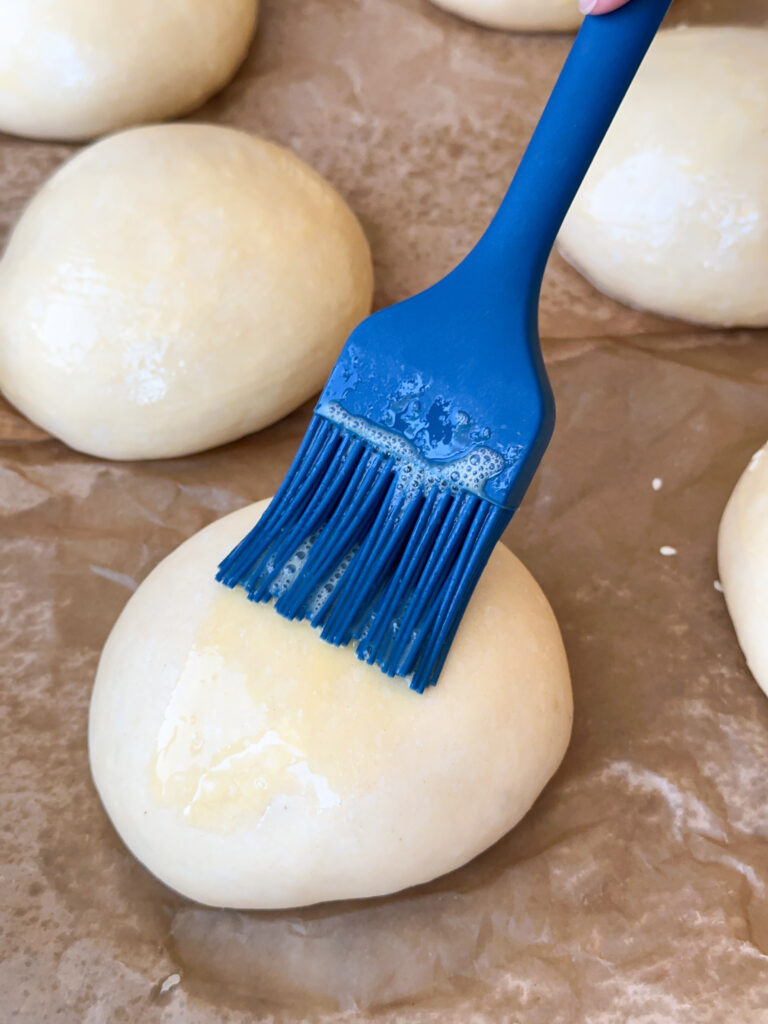
Brush the buns with egg wash using a pastry brush or a paper towel. If using the paper towel method, just dip in egg mixture and brush all over the buns. This avoids an eggy rim around the base of the buns.
If you use a pastry brush and have a lot of egg wash at the base, absorb some of the egg with a paper towel gently before baking to avoid an egg rim.
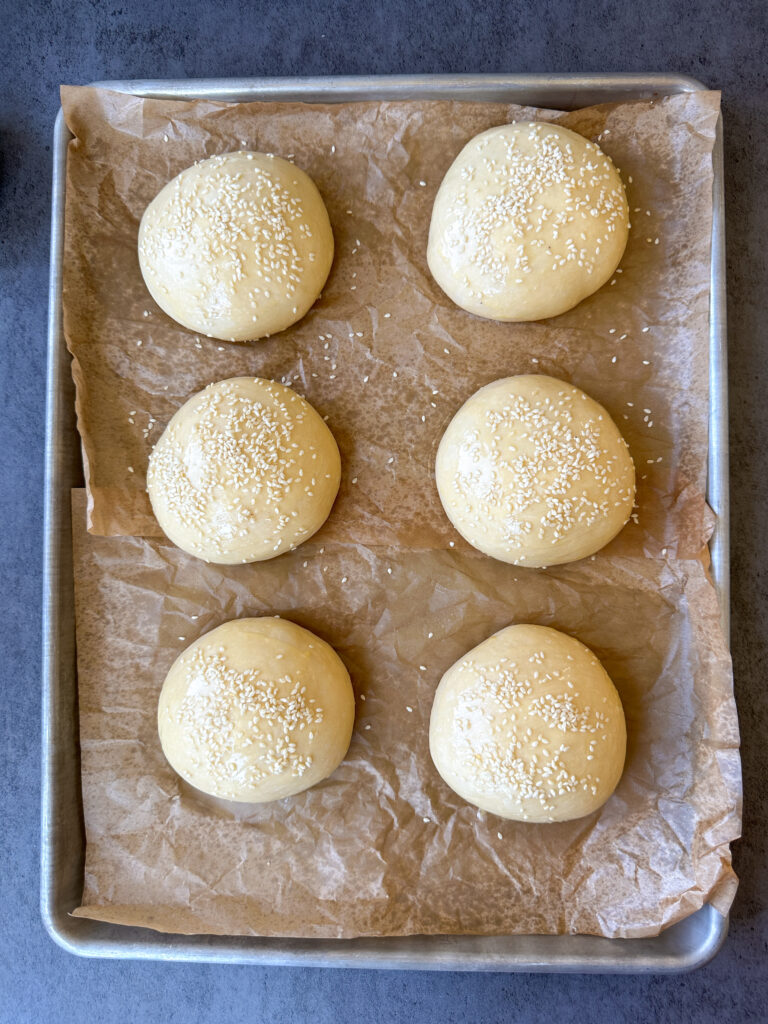
Sprinkle the buns with sesame seeds if desired, and transfer the buns to the hot preheated oven.
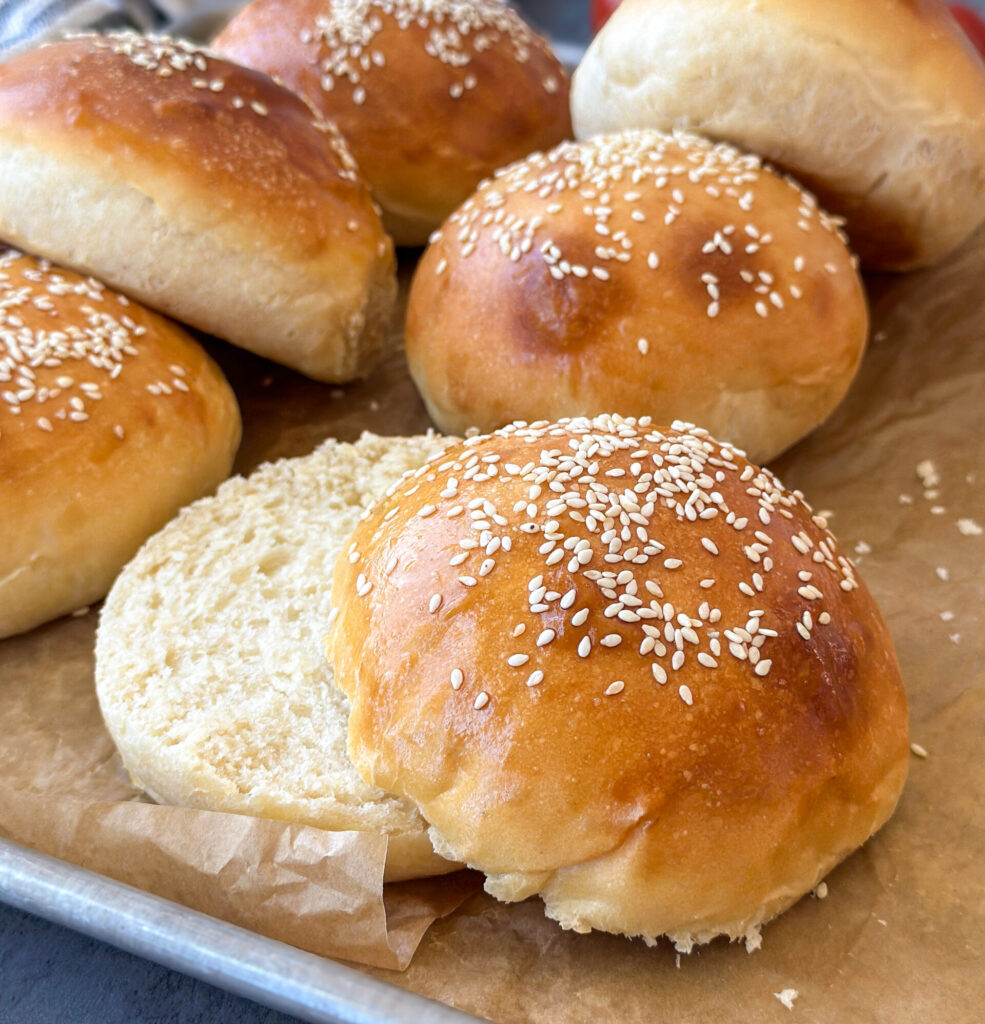
Bake the buns for 20 to 24 minutes, rotating halfway through. Internal temperature should reach 195–200°F. The tops should be deeply golden.
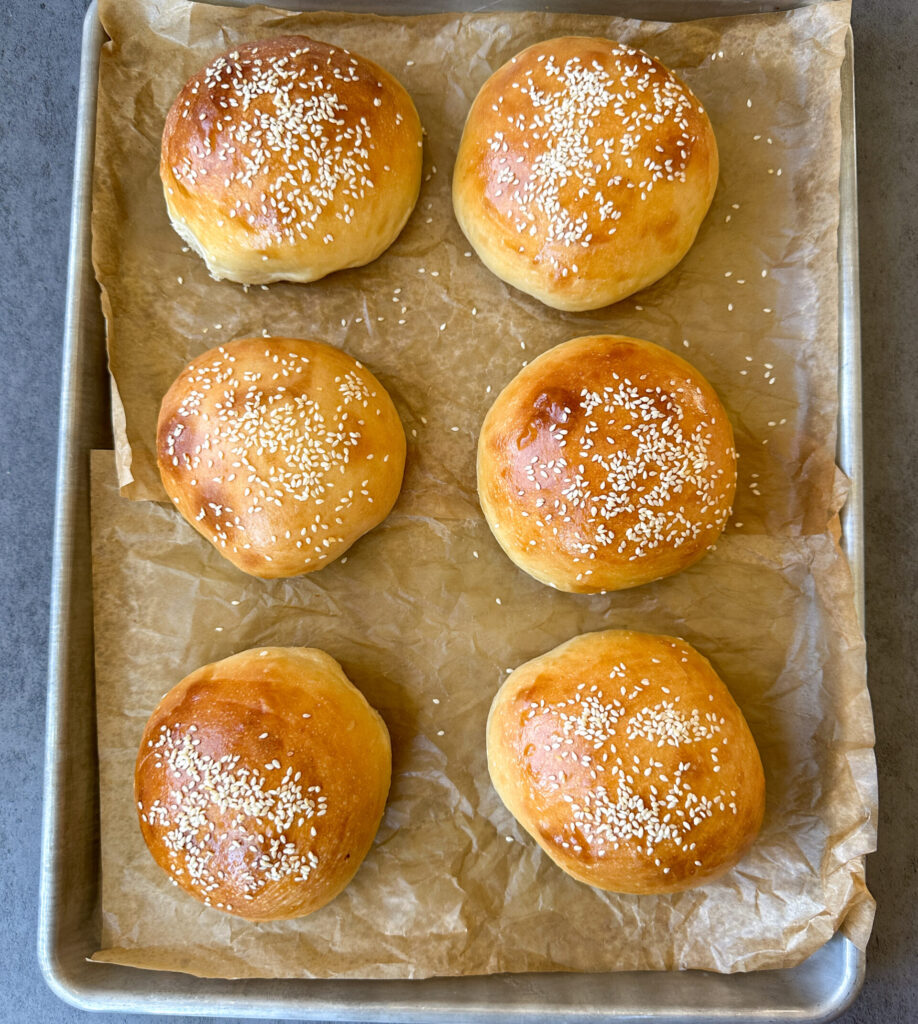
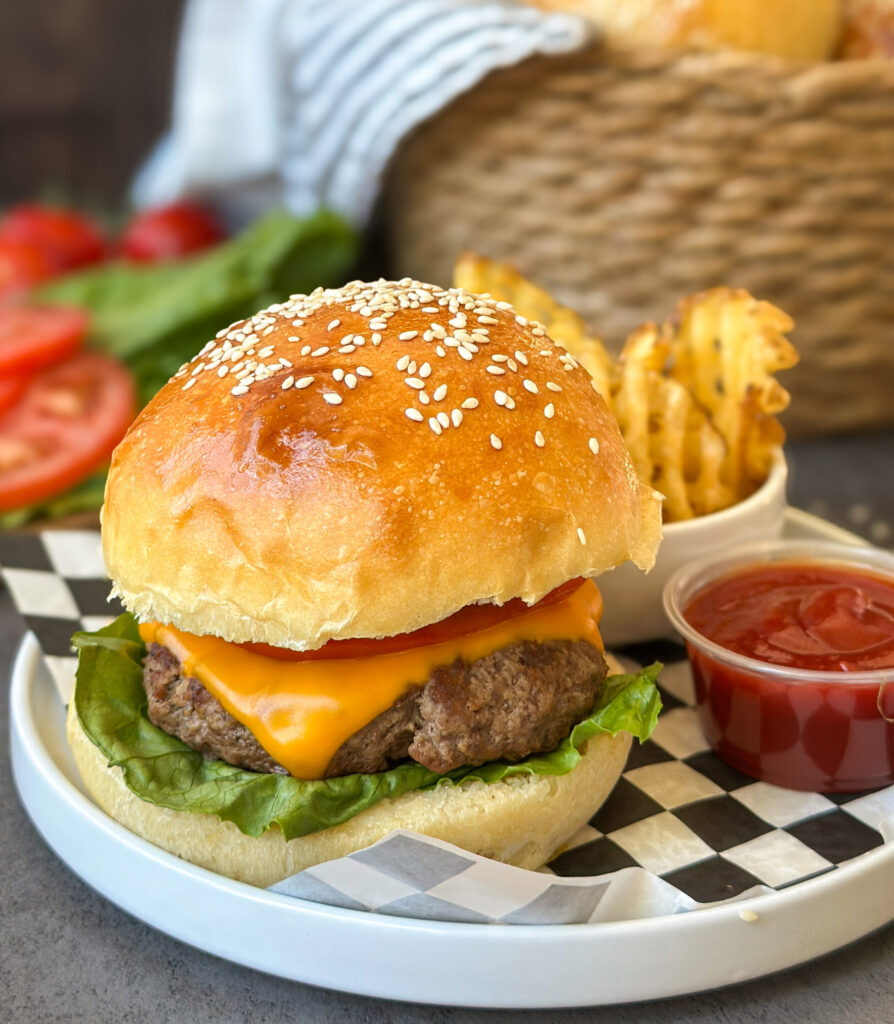
Cool the buns on a wire rack at least 20 minutes before slicing. They’re perfect for piling them high with hamburgers, pulled pork, or grilled chicken!
Yields 8 hamburger buns
How to Store
Room Temperature: Buns are best stored in airtight packaging at room temperature for 2-3 days.
Freezer: Freeze buns for up to 2 months in airtight container, gently thaw and reheat when ready to use.
FAQ’S
Yes. Active starter works perfectly, though the yeast is what makes this recipe rise.
Yes! Swap it 1:1 (2 1/4 tsp or 7g). Bloom the active dry yeast first by mixing it with the milk from the recipe and a pinch of the sugar. Make sure you warm the milk first in the microwave until warm to touch. Add the yeast and whisk, then let it sit 5–10 minutes until foamy, then add it in with the wet ingredients and continue as written. The dough may take slightly longer to rise (about 15–30 minutes more), but the texture will still be soft and fluffy.
If you loved this recipe, drop a comment and leave a star review and don’t forget to checkout more of my sourdough recipes!
Sourdough Sandwich Breads:
- Sourdough Italian Herb and Cheese Bread (Subway Copycat)
- Sourdough Honey Oat Bread (Subway Copycat)
- Sourdough Burger Buns (same day recipe)
Sourdough Discard Burger Buns
Ingredients
Wet Ingredients:
- 1/2 (120g) cup sourdough discard
- 3/4 (210g) cup whole milk warmed to about 80°F
- 1/3 (70g) cup water
- 1/4 (60g) cup granulated white sugar
- 1 large egg
- 3 (42g) Tbsp unsalted butter softened
- 2 (28g) Tbsp avocado oil or neutral oil
- 2 1/4 (7g) tsp instant yeast
Dry Ingredients:
- 4 (500g) cups bread flour or all purpose
- 1 1/2 (10g) tsp fine sea salt
Topping:
- 1 egg
- 2 tsp water
- 2-3 Tbsp Sesame seeds optional
Instructions
Step 1: Mix the Dough
- In a large bowl or the bowl of your stand mixer, add the sourdough discard, whole milk, warm water, sugar, egg, oil, and yeast. Whisk until everything is loosely combined, a few lumps are okay.1/2 (120g) cup sourdough discard, 3/4 (210g) cup whole milk, 1/3 (70g) cup water, 1/4 (60g) cup granulated white sugar, 1 large egg, 2 (28g) Tbsp avocado oil, 2 1/4 (7g) tsp instant yeast
- After you combine the wet ingredients, add the bread flour and salt to the bowl.4 (500g) cups bread flour, 1 1/2 (10g) tsp fine sea salt
- Mixing by hand: If you're mixing this dough by hand, mix and knead the dough together until it's a shaggy ball. This should take about 5 minutes.
- Add the butter by the Tablespoon and knead it slowly into the dough until incorporated. This should take another five minutes.
- Mixing with a stand mixer: If you're using a stand mixer, knead the dough on the lowest setting for 8-10 minutes, scraping the bowl halfway through to make sure everything is incorporated.
- Add the butter by the Tablespoon into the dough with the mixer on low speed, until all of the butter is worked into the dough. This should take about another five minutes.
- Once the dough is mixed, grease a bowl or container large enough for the dough to double with cooking spray and transfer the dough to the container. Cover the dough with plastic or a lint-free towel, and allow the dough to rest 20 minutes.
- After 20 minutes, perform one set of stretch and folds to work the dough to strengthen the gluten.
- How to do a stretch and fold: Starting at the edge of the dough with lightly wet hands, gently lift one edge of the dough, stretch it up, and fold it over the center. Rotate the bowl or container 90 degrees and repeat with the next side. Do this for all four sides of the dough to form a ball.
Step 2: Bulk Fermentation
- Cover the dough and allow it to rest in a warm spot until it has reached a 90 percent rise.
- Note on Temperature: Your dough loves a warmer climate, so aim to keep your dough between 73-78 degrees (you can use your digital thermometer to check the temperature).
Step 3: Shape the Buns
- Turn the dough out onto a lightly floured or oiled surface. Divide into 8 equal portions (about 140-150g each).
- Shape each section of dough into a tight ball by cupping your hand and rolling it on the counter in a circular motion.
- Transfer the dough balls to a baking sheet lined with parchment or a silicone mat, spacing the buns evenly. I usually do 4-6 buns per baking sheet so they have plenty of space.
- Cover the trays of buns with a damp lint-free towel or oiled plastic wrap for the final rise.
Step 4: Bake the Buns
- Let the buns proof at room temp for about an hour, or until buns are noticeably puffy and almost doubled in size.
- Preheat the oven to 375°F (190°C).
- Beat 1 egg yolk with 2 teaspoons of water in a small bowl.1 egg, 2 tsp water
- Brush the buns with egg wash using a pastry brush or a paper towel. If using the paper towel method, just dip in egg mixture and brush all over the buns. This avoids an eggy rim around the base of the buns.
- If you use a pastry brush and have a lot of egg wash at the base, absorb some of the egg with a paper towel gently before baking to avoid an egg rim.
- Sprinkle the buns with sesame seeds if desired, and transfer the buns to the hot preheated oven.2-3 Tbsp Sesame seeds
- Bake the buns for 20 to 24 minutes, rotating halfway through. Internal temperature should reach 195–200°F. The tops should be deeply golden.
- Cool the buns on a wire rack at least 20 minutes before slicing. They’re perfect for piling them high with hamburgers, pulled pork, or grilled chicken!
- Yields 8 hamburger buns