
Sourdough Pumpkin Roll (long ferment option)
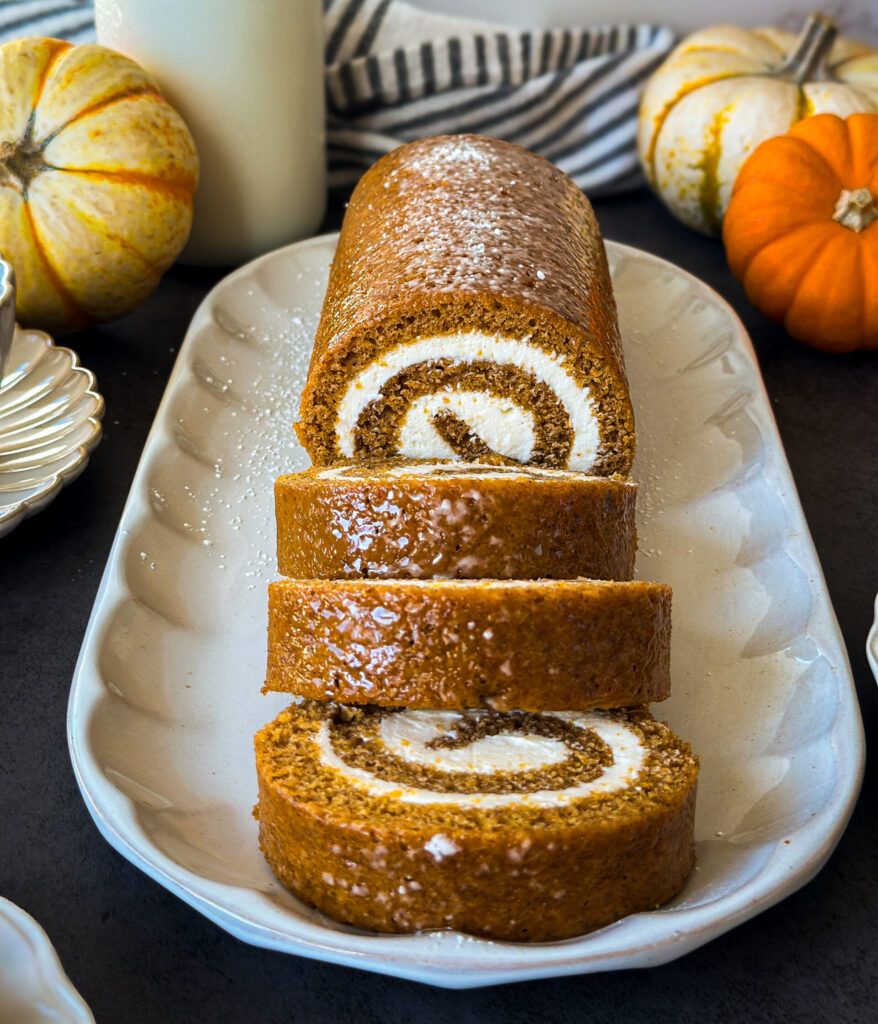
Pumpkin roll is a holiday classic, so you know I had to give it a sourdough twist! This Sourdough Pumpkin Roll (long ferment option) is a soft, spiced pumpkin cake wrapped around a fluffy cream cheese filling. If cake rolls have always intimidated you, don’t worry! I’ll walk you through making the perfect cake roll without the cracks. It’s the perfect dessert for your Thanksgiving table and even better the next day!
Why You’ll Love This Recipe
- Soft and moist: This cake is so light and full of pumpkin flavor and spice.
- No cracking: My tested method makes a beautiful swirl without the dreaded splitting.
- Make ahead friendly: Prep this cake a few days ahead for a stress free holiday.
- Long ferment option: Make this cake with discard and bake right away or ferment the batter overnight.
Tools You’ll Need:
- 10×18 inch half sheet baking pan- Please note this recipe is scaled for a half sheet baking pan, not a jelly roll pan. This cake will be too thick and be prone to cracking if you use a jelly roll pan. You’ll also want to use a pan with a 1 inch lip. I linked the half size baking sheets I like here.
- Mixing bowls– for mixing cake batter and icing.
- Whisk– for combining ingredients.
- Spatula- for folding ingredients and spreading cake batter.
- Kitchen scale (optional)– for accurate measuring especially helpful with sourdough baking.
- Measuring cups and spoons- to measure smaller ingredients.
- Parchment paper- for lining pans for a clean release. Don’t skip this.
- Lint-free kitchen towel- To roll the cake. I’ve linked my favorite cotton kitchen towels for this here. Don’t use parchment, the cake roll won’t be able to release steam and cool properly.
- Plastic wrap- to wrap roll and chill.
- Small sieve or duster- to dust towel and cake with powdered sugar. I love this small hand held sieve for dusting linked here.
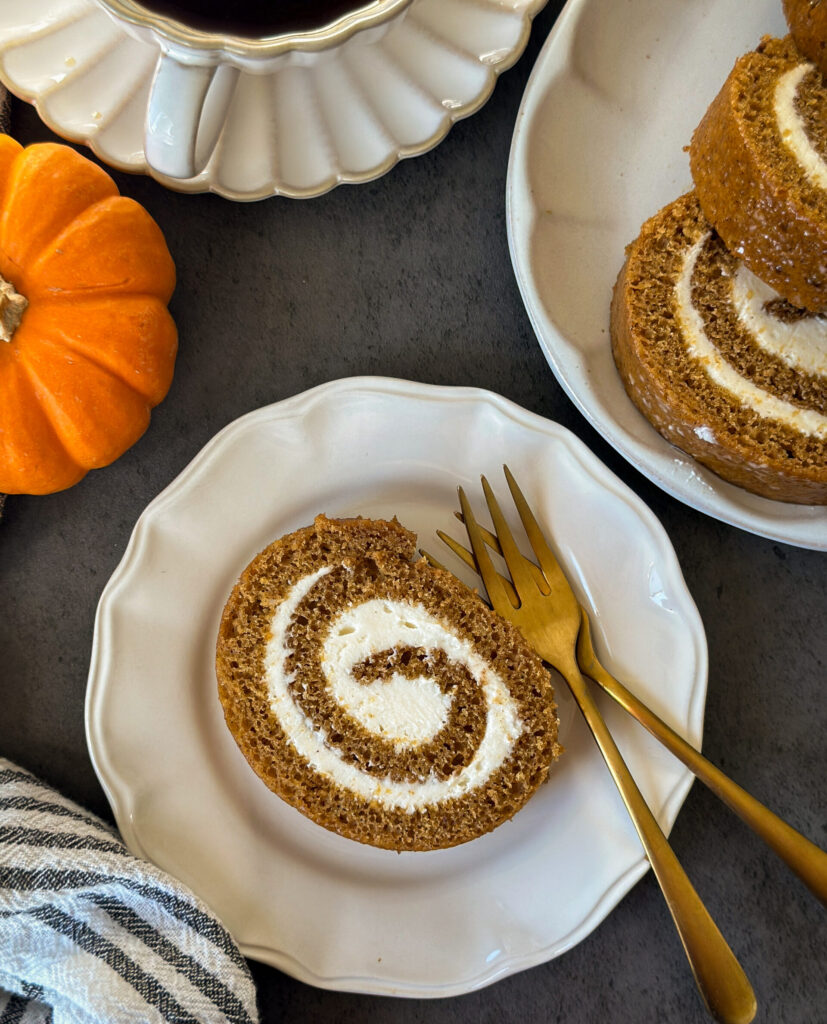
Gather Your Ingredients:
- Pumpkin Puree– Brings natural sweetness, moisture, and tenderness to the cake, while giving that classic pumpkin flavor we want!
- Sourdough starter- (flat or past peak, can be cold or room temperature). Adds depth of flavor and moisture without making this cake “sour”. Key for fermentation if you ferment the batter.
- All-purpose flour- Gives cake structure and keeps the crumb tender. You can also substitute for cake flour.
- White sugar– Sweetens the cake and makes the crumb tender.
- Brown sugar– Helps to sweeten the cake and gives that fall flavor from the molasses.
- Vanilla extract– Enhances the flavor and brings warmth. Used in the cake and the filling.
- Eggs (room temperature)– provide structure and lift with moisture, gives cake the spongy texture we want.
- Baking powder + Baking soda– Ensures the right rise and tenderness.
- Salt- Balances sweetness and enhances all the other flavors.
- Cinnamon, Ginger, Nutmeg, and Cardamom- Rounds out the pumpkin flavor and brings that classic pumpkin spice warmth. You can substitute these spices for a pumpkin spice blend if you prefer, but I like to mix my own to guarantee the flavor is the same each time. Directions on using a pumpkin spice bend with be listed under FAQ’s.
- Unsalted Butter- Used to make the the cream cheese buttercream filling.
- Powdered Sugar- Sweetens and stabilizes the cream cheese filling. Do not use granulated sugar or your icing will be grainy.
- Cream Cheese– you’ll need this for that lovely cream cheese filling! Make sure to use cream cheese and not a spread for the filling.
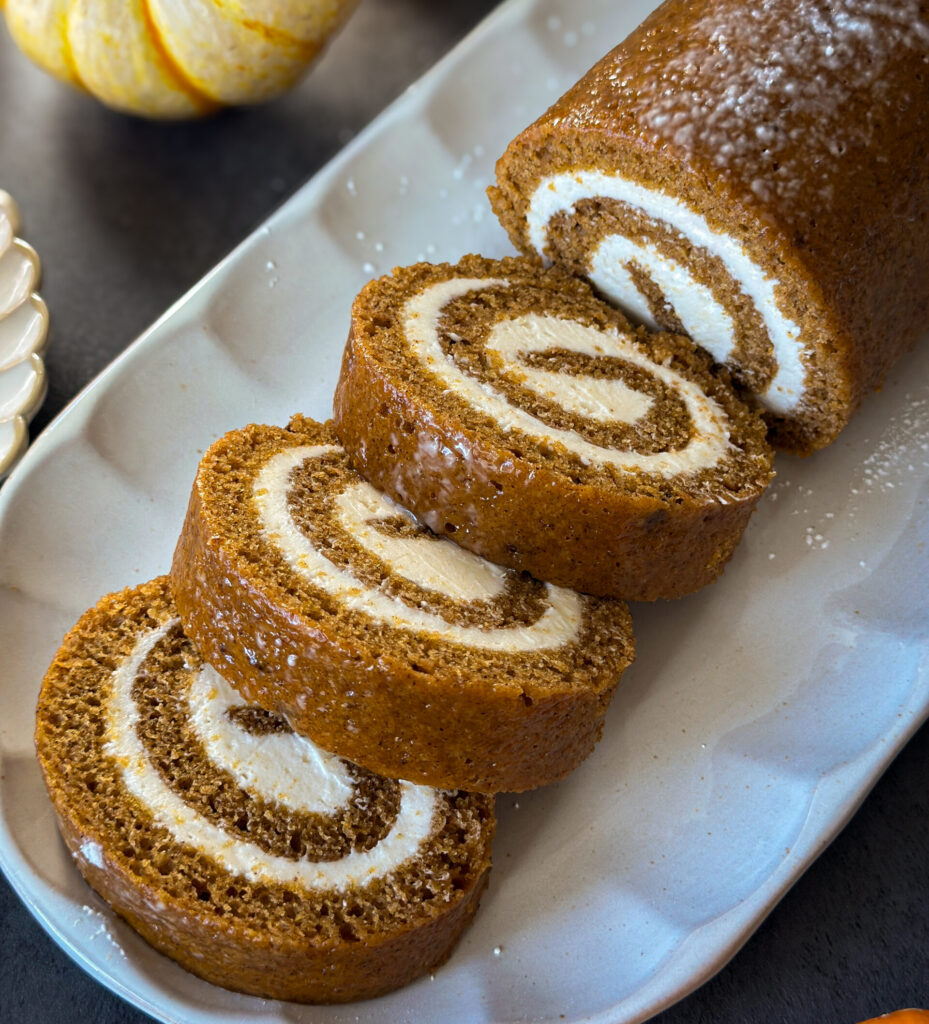
Instructions
Step 1: Mix the Pumpkin Cake Batter
In a large mixing bowl, beat the eggs for approximately 2 minutes until light and slightly foamy.
Add the sourdough starter or discard, granulated sugar, brown sugar, pumpkin purée, and vanilla extract to the beaten eggs. Mix until smooth and combined.
In a separate bowl, whisk together the flour, baking powder, baking soda, salt, cinnamon, ginger, nutmeg, and cardamom (see notes for pumpkin pie spice swap).
Gradually add the dry ingredients to the wet ingredients, gently mixing the batter just until combined. Avoid overmixing this batter or your cake will be tough.
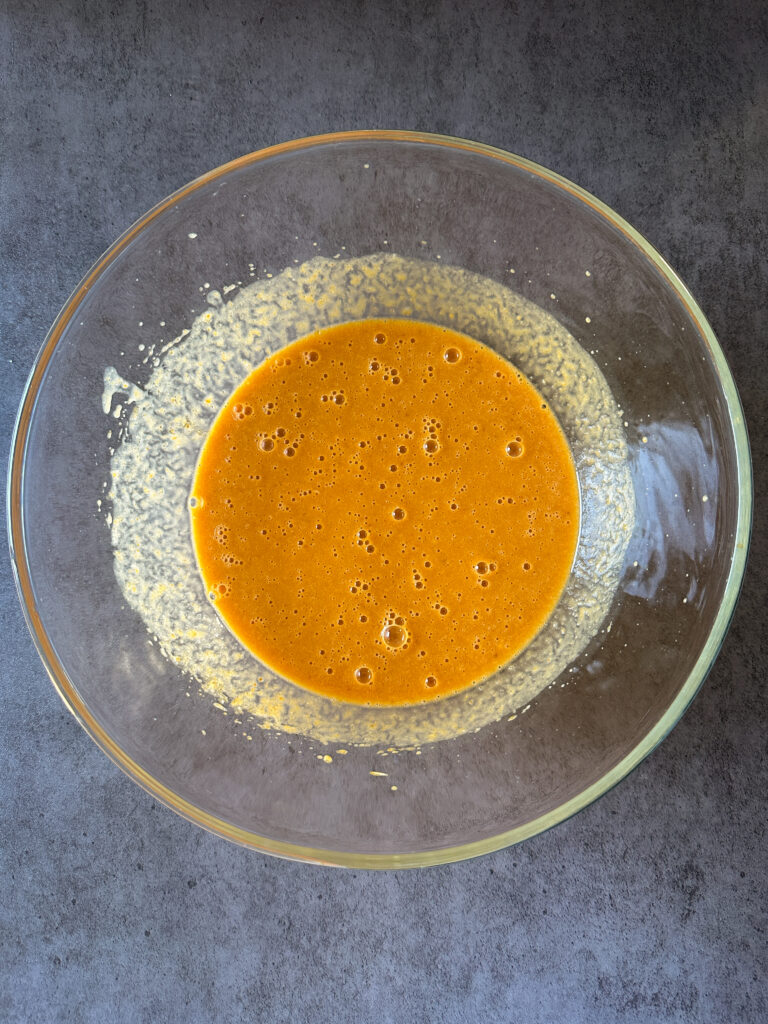
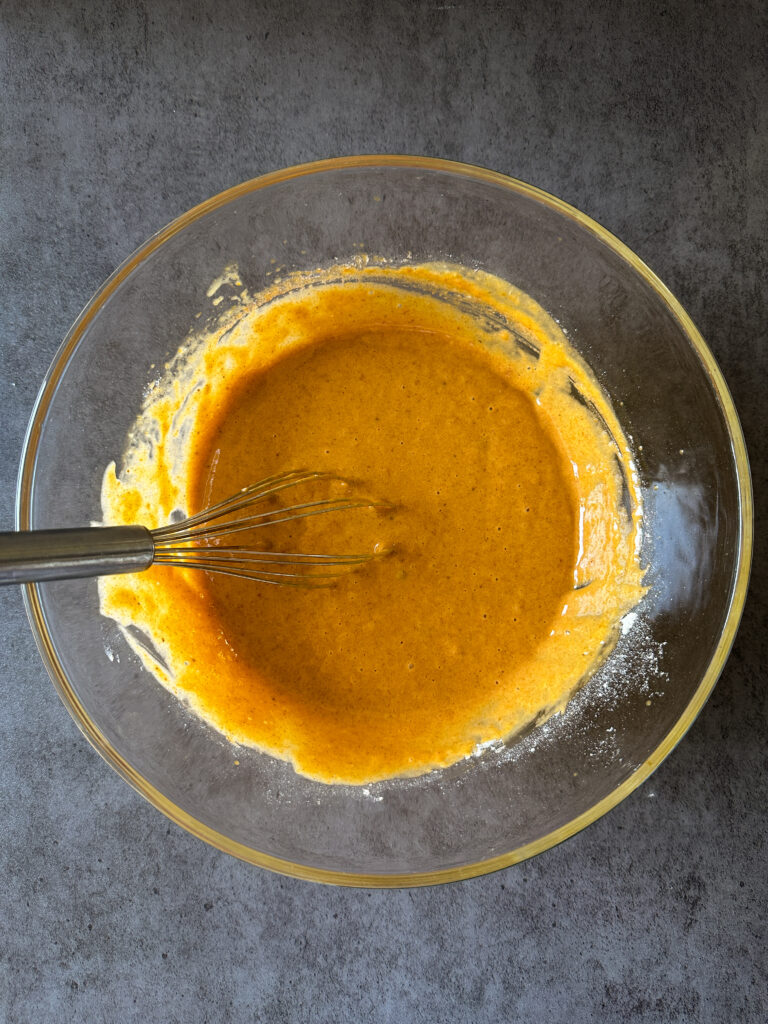
Overnight Fermentation Option: Cover the bowl tightly and refrigerate for 8–12 hours.
Step 2: Bake and Roll Cake
Continued Overnight Fermentation: The next day, remove the batter from the refrigerator and allow it to sit at room temperature for approximately 1 hour before baking. Gently fold the batter a few times to pop air bubbles, then proceed with the recipe.
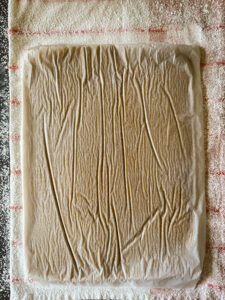
Preheat the oven to 350°F (177°C). Spray your half sheet baking pan lightly with cooking spay to help your parchment paper stick, then line with parchment paper and lightly mist again with cooking spray. I like to lightly flour my parchment for a clean release as well.
Note: you want your parchment paper to have about a 1 inch lip on the edges of your cake pan, This makes for a clean release from the pan. See the photo below for guidance. Please also note this recipe is scaled for a half sheet baking pan, not a jelly roll pan.
Pour the batter into the cake pan, make sure to get any last bits in the bowl. Spread the batter evenly over the pan to the edges, then tap the pan on the counter to release any air bubbles and even out the batter.
It’s very important to spread the batter evenly to avoid thin patches; if you get thin spots they’re more prone to cracking.
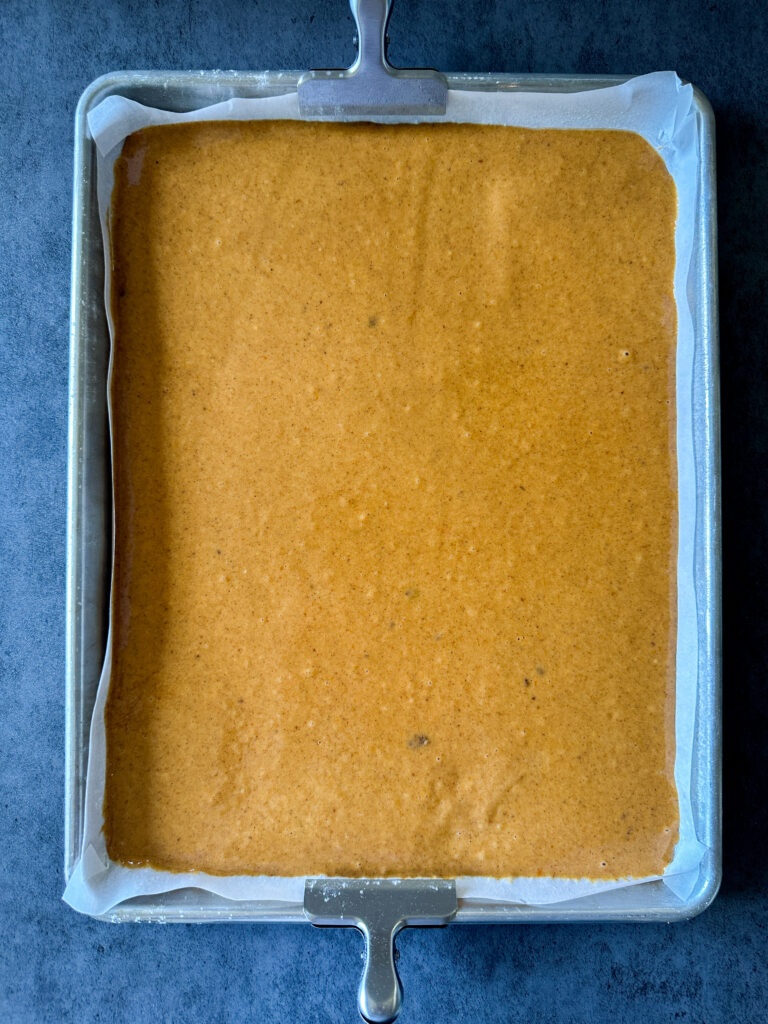
Transfer your cake pan to your preheated oven and bake for 14 minutes on the center rack. Your cake is done when the top springs back when lightly touched and edges pull away slightly. Don’t overbake this cake, or you’ll end up with cracking when you roll it!
While your cake is baking, lay a clean lint-free kitchen towel out on a clean work surface. You’re going to use this towel to wrap your cake up into a log, helping it hold the roll shape we want. I don’t recommend using parchment, because it doesn’t allow the cake to sweat and cool properly for a perfect cake roll.
Fold the towel if needed to be just an inch or two wider than your cake pan. Dust the top liberally with 1/3 cup powdered sugar about the size of your cake pan.
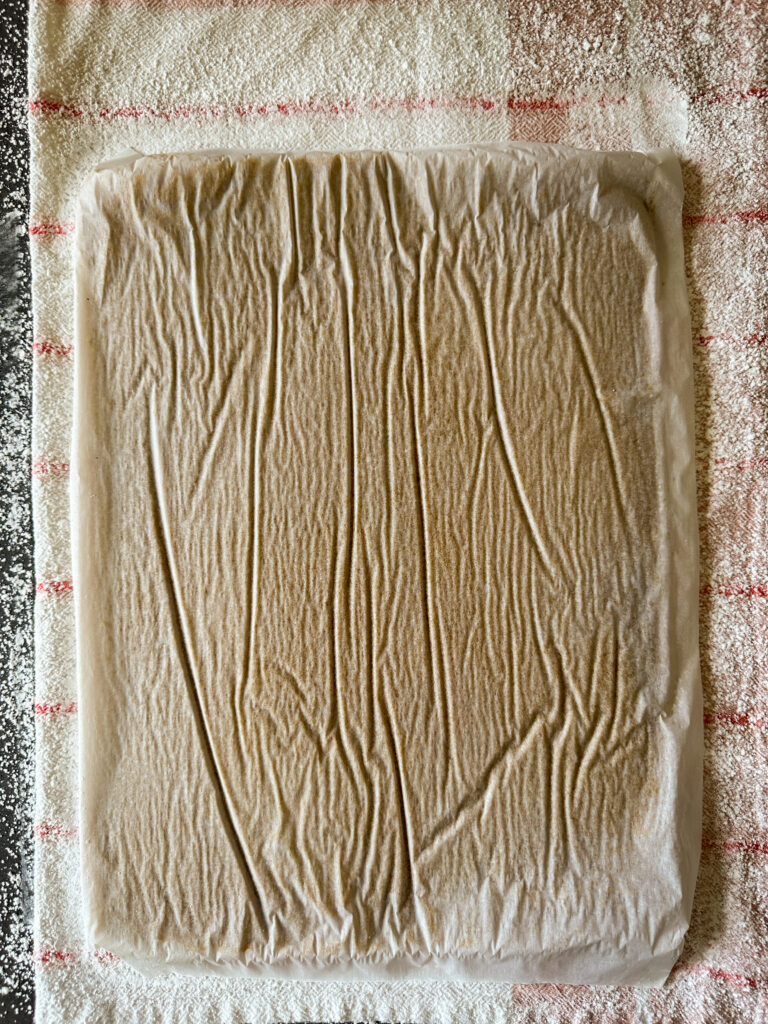
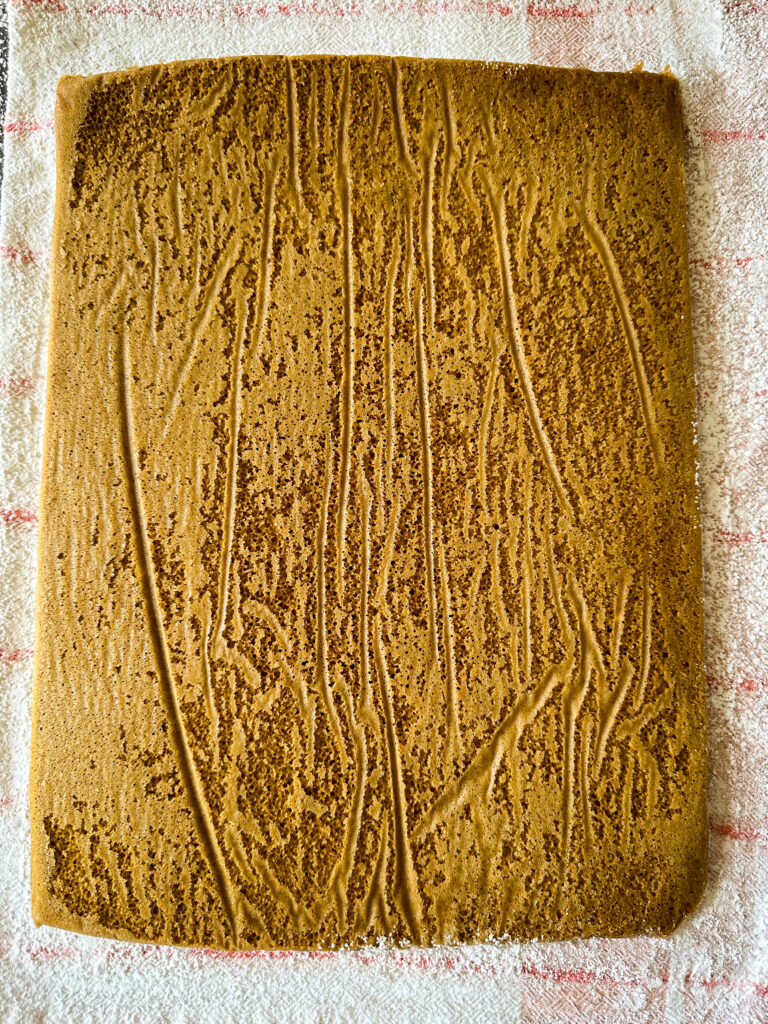
As soon as your cake is done, remove from the oven and allow to rest a few minutes (don’t wait more thank five minutes or the cake will crack).
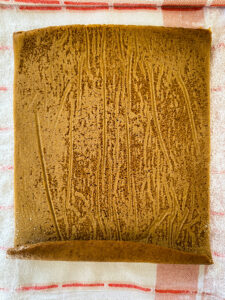
Then, carefully flip the pan onto the kitchen towel that has been powdered with sugar as close to the bottom edge of the kitchen towel as possible. Carefully remove the parchment from the top of the cake.
Dust the top of the cake with another 1/3 cup powdered sugar.
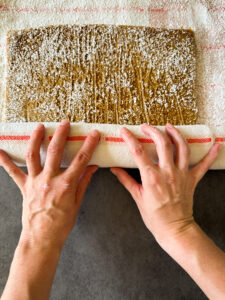
Working carefully but quickly, roll up the cake at the end with the towel until all of the cake has been rolled into a neat log into the towel. You want to make sure when you roll the cake up it isn’t so tight that it splits.
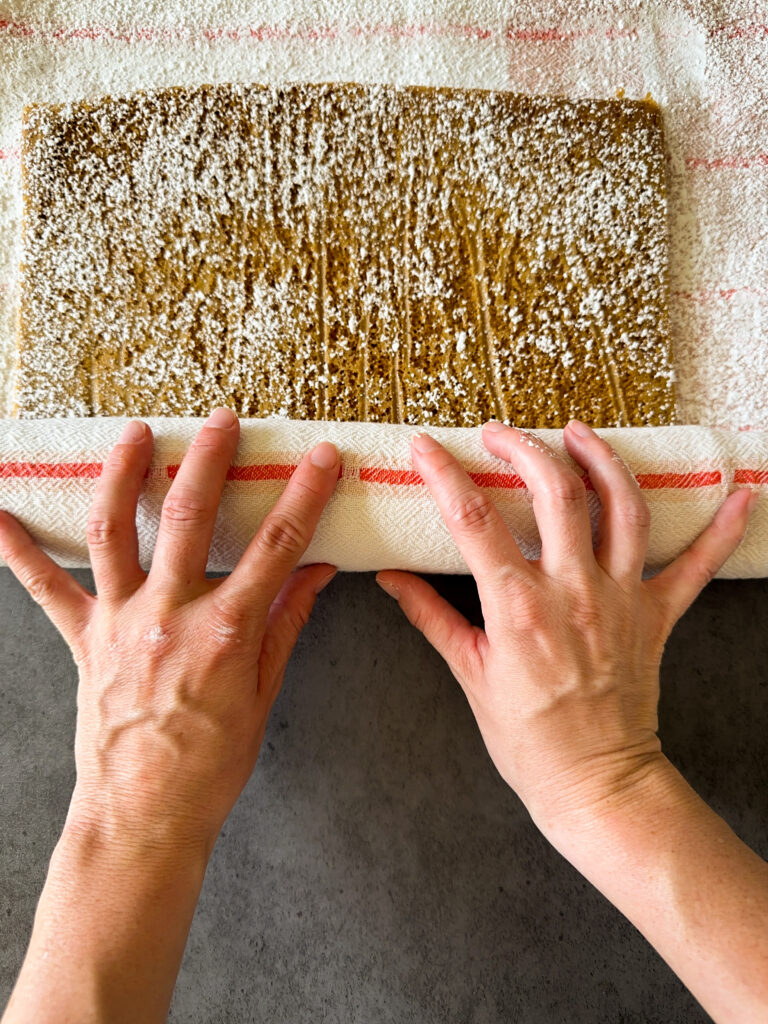
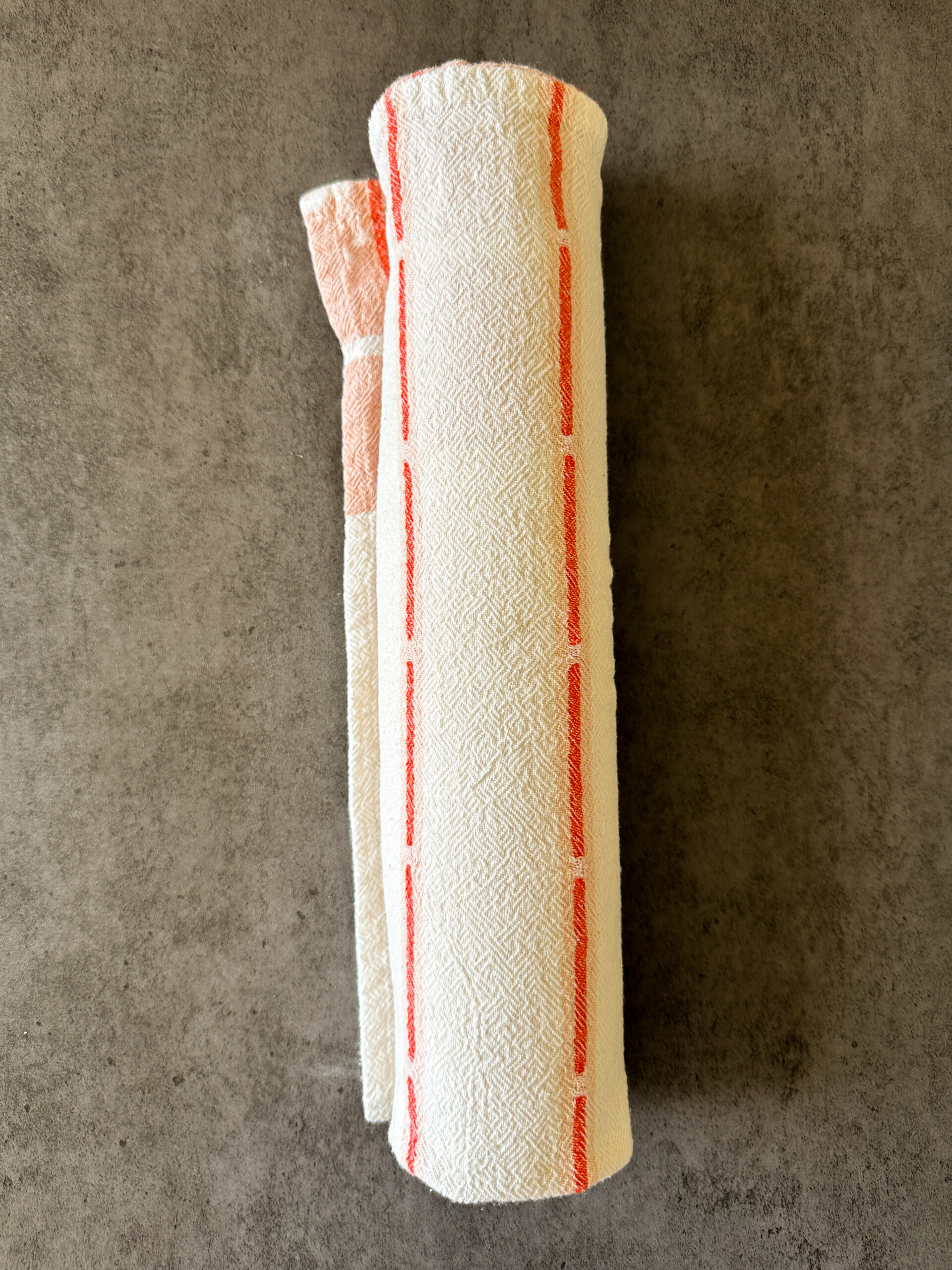
Make sure the cake rests seam side down as it cooks. Allow this cake log to cool for at least 2 hours. This step will give the cake the memory of the roll, and the cooling process will avoid cracking.
Step 3: Fill the Roll
After the roll has cooled for a few hours, prepare your cream cheese filling.
In a bowl, add your softened cream cheese and softened butter.
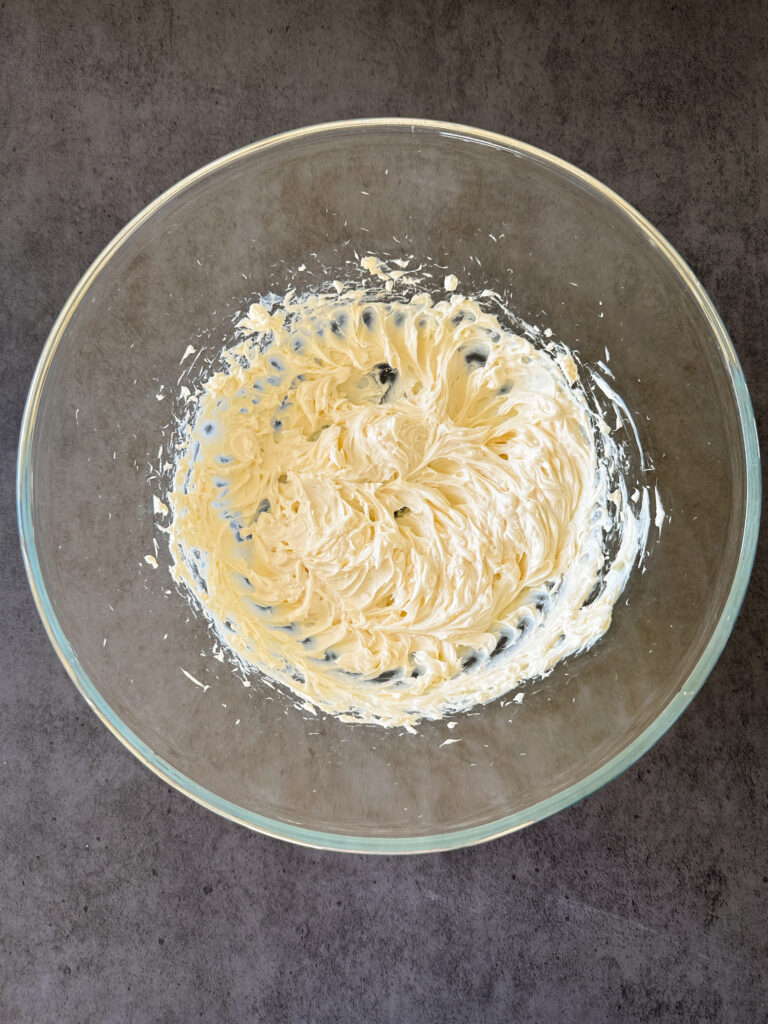
Beat the cream cheese and butter on high with hand beaters or a stand mixer with a whisk attachment for about two minutes until pale and fluffy.
Add the vanilla and salt to the filling, and mix in for a minute.
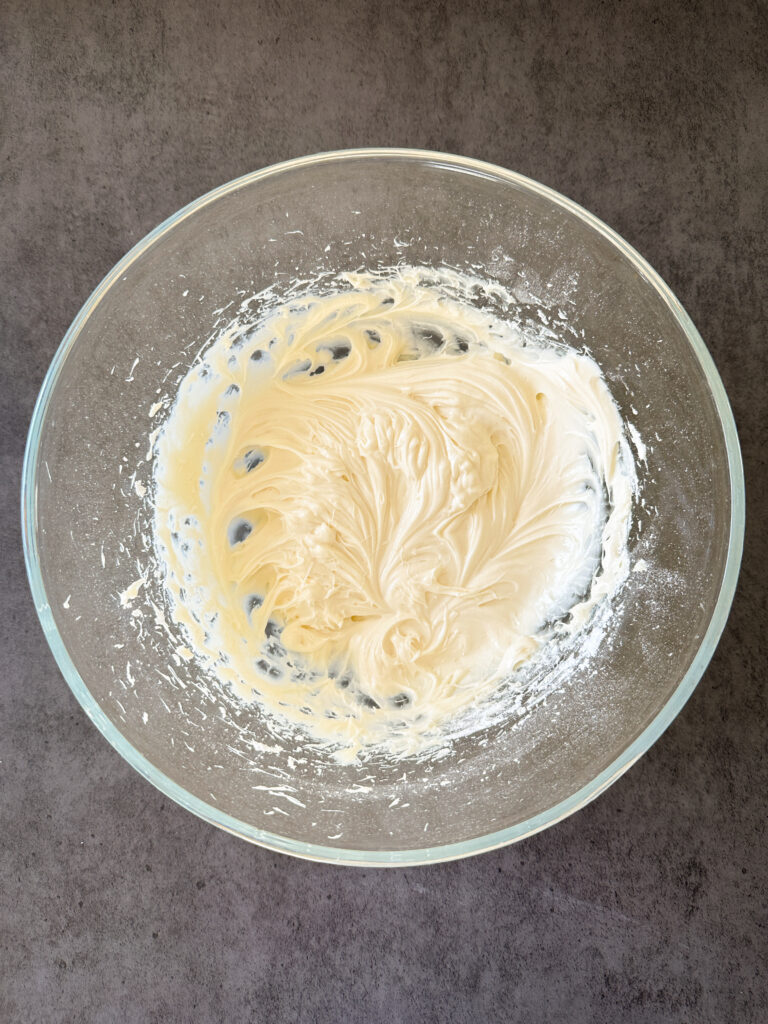
Add the sifted powdered sugar (this avoids lumps) to the filling, and combine on low until the sugar has been combined into the filling.
Turn mixer to high after powdered sugar has been incorporated, and beat for another minute or two until the icing is light and fluffy.
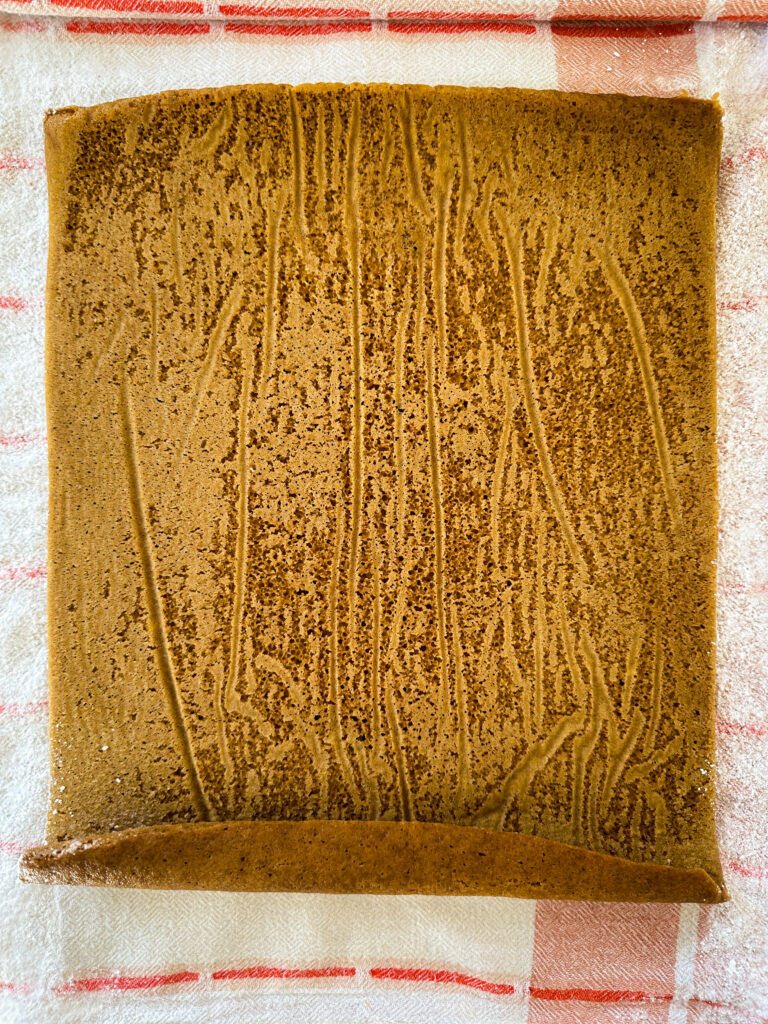
On a clean work surface, gently unroll your cake out of the towel.
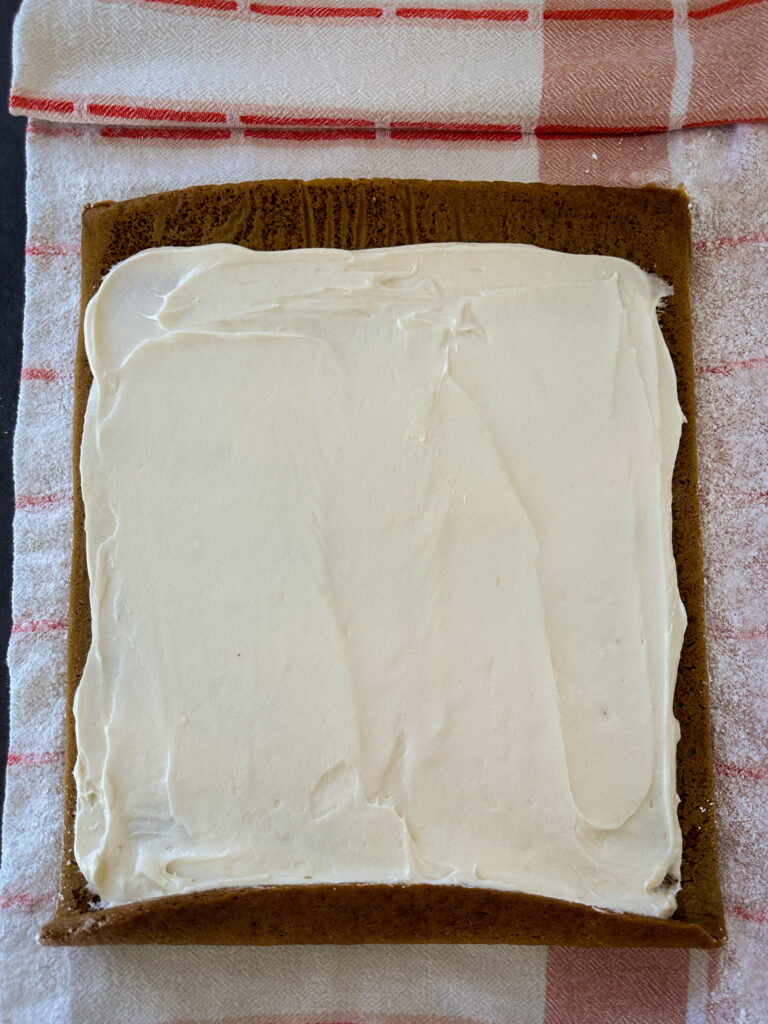
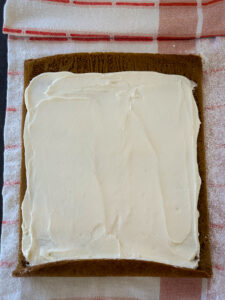
Transfer all of the cream cheese filling to the top of the cake, and spread the icing evenly over the top leaving a 1/2 inch border at the top of the cake as pictured below. Make sure the icing is spread under the edge that has curled under as this will be the center of the roll! We don’t want that empty.
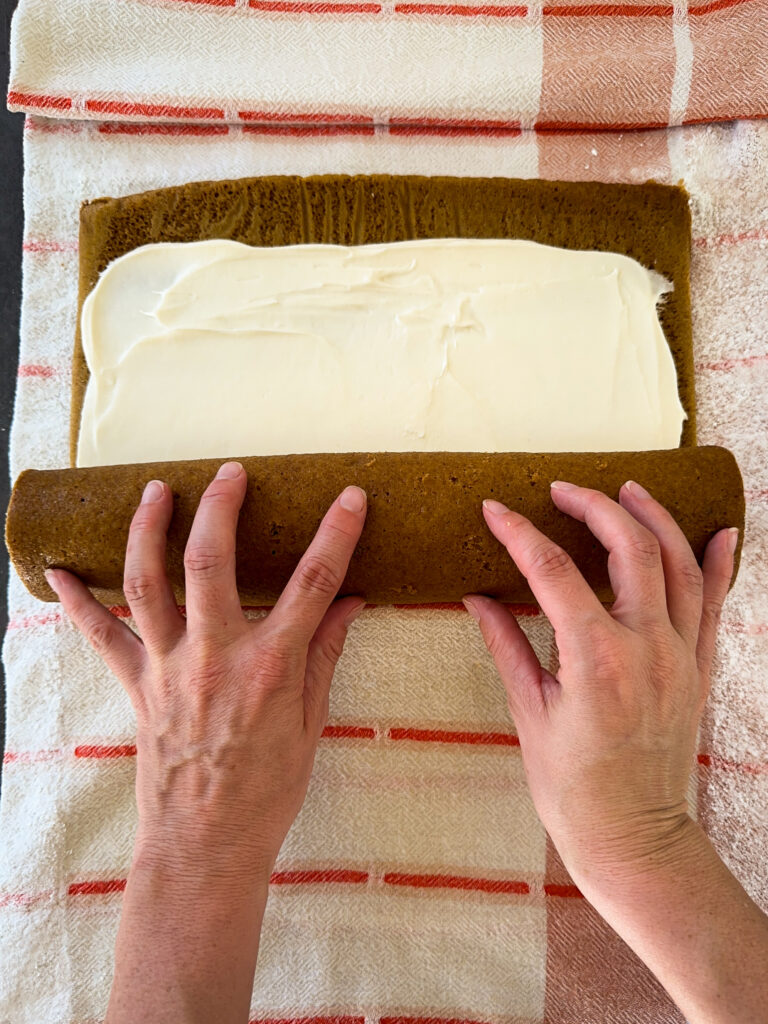
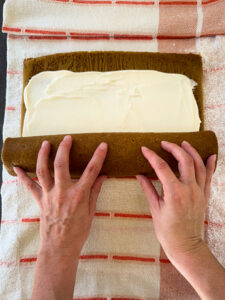
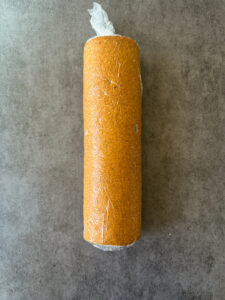
Gently roll the cake back up (this time without the towel), until you’ve formed a log again. Place a piece of plastic wrap at the edge of the roll and gently roll the cake roll onto the plastic.
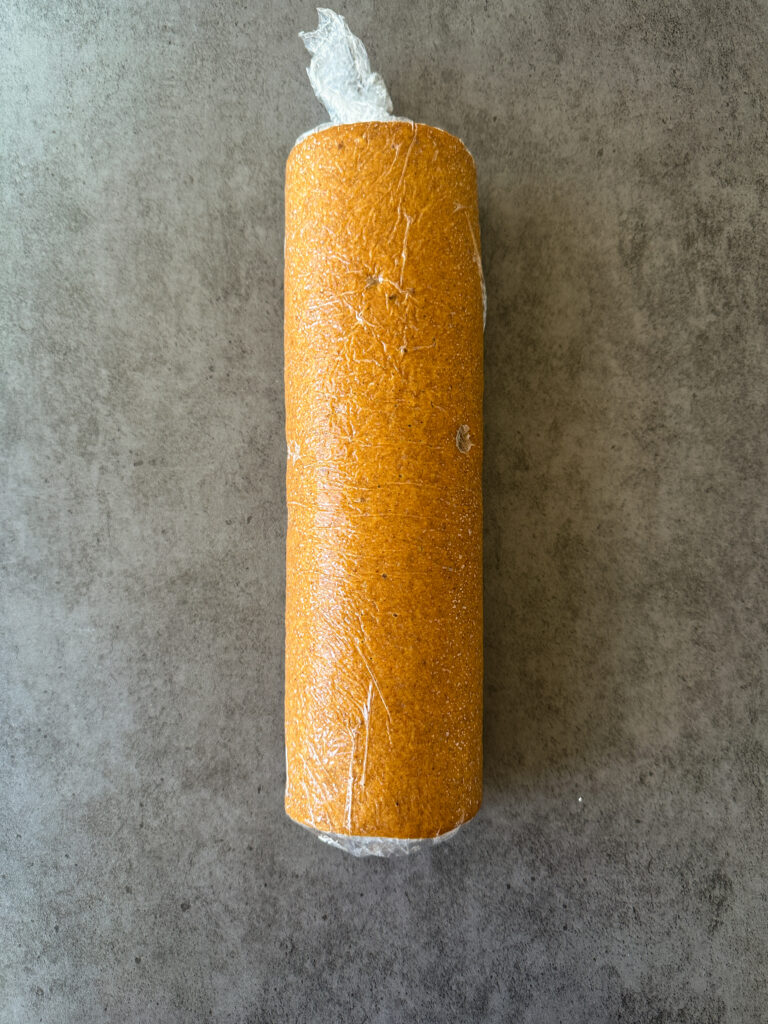
Completely wrap the roll in plastic and seal, then place on a cookie sheet and transfer to the refrigerator to set up.
Refrigerate the roll at least 2 hours or overnight to set up completely.
Step 4: Slice and Serve
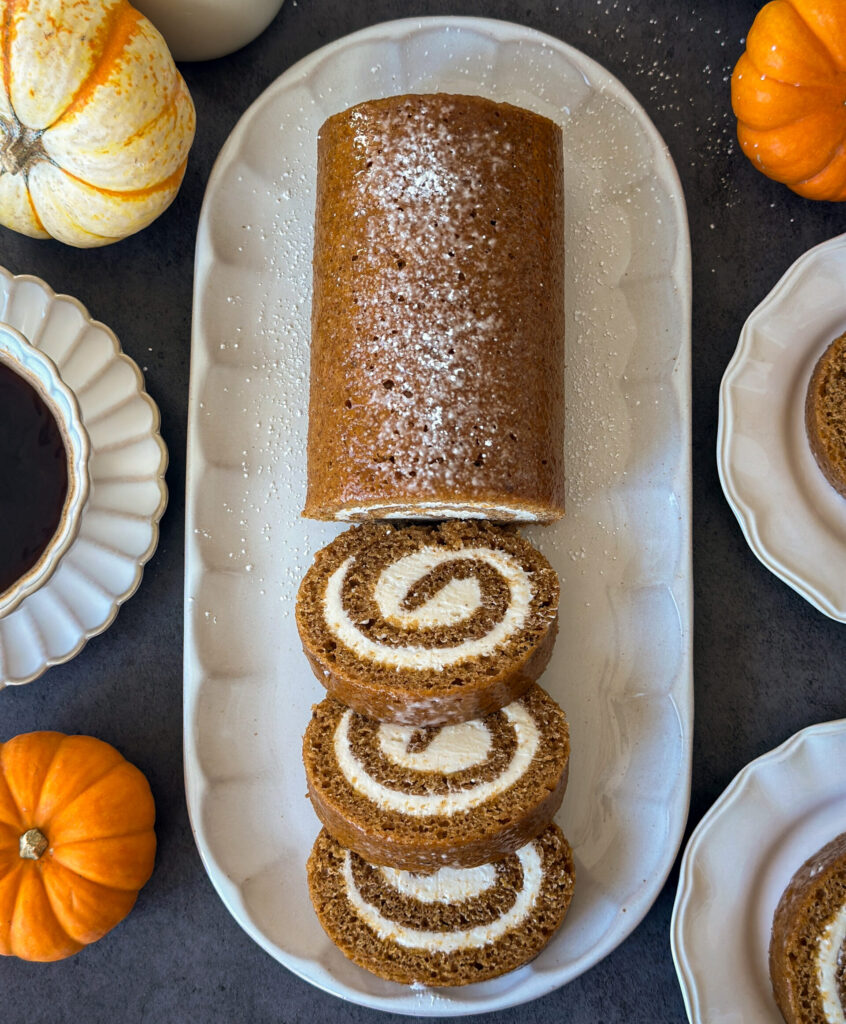
When you’re ready to serve the cake roll, gently unwrap from the plastic and transfer to a serving platter.
Lightly dust the cake roll with more powdered sugar, then wet a serrated knife and cut the roll into 10-12 clean sections. Serve and enjoy!
Tip: Using a wet knife and cleaning between slices makes for the cleanest cuts so your roll doesn’t smudge.
Yields 1 cake roll
How to Store:
Refrigerator– Keep roll wrapped and chilled for up to 6 days. Slice and serve!
Freezer- Wrap tightly in plastic and freeze for up to 1 month. Thaw in the refrigerator overnight before slicing and serving.
FAQ’S
Yes! Mix and bake the same day, you’ll still get great results!
Yes! This roll keeps beautifully in the refrigerator up to 6 days, and can be frozen up to a month.
No. Pumpkin puree is what you want to use, pumpkin pie filling has sugar and other ingredients added that will change the roll.
Rolling warm prevents cracks and helps it hold shape once filled.
It was likely overbaked or rolled after cooling too much. Bake just until springy and roll warm.
If you enjoyed this recipe, drop a comment and leave a star review and don’t forget to try my other seasonal pumpkin recipes!
Pumpkin Recipes You’ll Love:
- Sourdough Pumpkin Cream Cheese Muffins (with oat crumble!)
- Sourdough Pumpkin Oatmeal Chocolate Chip Cookies
- Sourdough Pumpkin Snickerdoodles
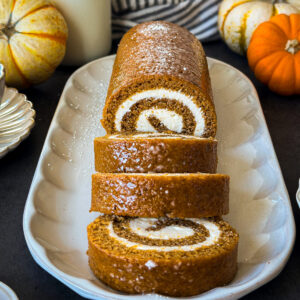
Sourdough Pumpkin Roll (long ferment option)
Equipment
- 10×18 inch half sheet baking pan – Please note this recipe is scaled for a half sheet baking pan, not a jelly roll pan. This cake will be too thick and be prone to cracking if you use a jelly roll pan. You'll also want to use a pan with a 1 inch lip. I linked the half size baking sheets I like here.
- Mixing bowls – for mixing cake batter and icing.
- Whisk – for combining ingredients.
- Spatula – for folding ingredients and spreading cake batter.
- Kitchen scale (optional) – for accurate measuring especially helpful with sourdough baking.
- Measuring cups and spoons – to measure smaller ingredients.
- Parchment paper – for lining pans for a clean release. Don't skip this.
- Lint-free kitchen towel – To roll the cake.
- Plastic wrap – to wrap roll and chill.
- Small sieve or duster – to dust towel and cake with powdered sugar.
Ingredients
Pumpkin Cake Batter:
- ½ (120g) cup sourdough starter or discard (100% hydration)
- ½ (100g) cup granulated white sugar
- ⅓ (65g) cup brown sugar
- 1/2 (140g) cup pumpkin puree
- 1 tsp vanilla extract
- ¾ (110g) cup all-purpose flour
- 3 large eggs room temperature
- ¾ tsp baking powder
- ¼ tsp baking soda
- ¼ tsp fine sea salt
- 1½ tsp ground cinnamon
- ¾ tsp ground ginger (you can swap the ginger, nutmeg, and cardamom for 1 1/2 tsp pumpkin pie spice)
- ½ tsp ground nutmeg
- ⅛ tsp ground cardamom
Cream Cheese Filling:
- 8 (226g) oz cream cheese softened
- 6 (85g) Tbsp unsalted butter softened
- 1½ (180g) cups powdered sugar
- 1 tsp vanilla extract
- 1/8 tsp sea salt
For Dusting:
- 2/3 (80g) cup powdered sugar (divided in half; use 1/3 for towel and 1/3 cup on top of the cake)
Instructions
Step 1: Mix the Pumpkin Cake Batter
- In a large mixing bowl, beat the eggs for approximately 2 minutes until light and slightly foamy.3 large eggs
- Add the sourdough starter or discard, granulated sugar, brown sugar, pumpkin purée, and vanilla extract to the beaten eggs. Mix until smooth and combined.½ (120g) cup sourdough starter or discard (100% hydration), ½ (100g) cup granulated white sugar, ⅓ (65g) cup brown sugar, 1/2 (140g) cup pumpkin puree, 1 tsp vanilla extract
- In a separate bowl, whisk together the flour, baking powder, baking soda, salt, cinnamon, ginger, nutmeg, and cardamom (see notes for pumpkin pie spice swap).¾ (110g) cup all-purpose flour, ¾ tsp baking powder, ¼ tsp baking soda, ¼ tsp fine sea salt, 1½ tsp ground cinnamon, ¾ tsp ground ginger, ½ tsp ground nutmeg, ⅛ tsp ground cardamom
- Gradually add the dry ingredients to the wet ingredients, gently mixing the batter just until combined. Avoid overmixing this batter or your cake will be tough.
- Overnight Fermentation Option: Cover the bowl tightly and refrigerate for 8–12 hours.
Step 2: Bake and Roll Cake
- Continued Overnight Fermentation: The next day, remove the batter from the refrigerator and allow it to sit at room temperature for approximately 1 hour (don't exceed) before baking. Gently fold the batter a few times to combine, then proceed with the recipe.
- Preheat the oven to 350°F (177°C). Spray your half sheet baking pan lightly with cooking spay to help your parchment paper stick, then line with parchment paper and lightly mist again with cooking spray. I like to lightly flour my parchment for a clean release as well.
- Note: you want your parchment paper to have about a 1 inch lip on the edges of your cake pan, This makes for a clean release from the pan. Please also note this recipe is scaled for a half sheet baking pan, not a jelly roll pan.
- Pour the batter into the cake pan, make sure to get any last bits in the bowl. Spread the batter evenly over the pan to the edges, then tap the pan on the counter to release any air bubbles and even out the batter.
- It’s very important to spread the batter evenly to avoid thin patches; if you get thin spots they’re more prone to cracking.
- Transfer your cake pan to your preheated oven and bake for 14 minutes on the center rack. Your cake is done when the top springs back when lightly touched and edges pull away slightly. Don’t overbake this cake, or you’ll end up with cracking when you roll it!
- While your cake is baking, lay a clean lint-free kitchen towel out on a clean work surface. You’re going to use this towel to wrap your cake up into a log, helping it hold the roll shape we want. I don’t recommend using parchment, because it doesn’t allow the cake to sweat and cool properly for a perfect cake roll.
- Fold the towel if needed to be just an inch or two wider than your cake pan. Dust the top liberally with 1/3 cup powdered sugar about the size of your cake pan.2/3 (80g) cup powdered sugar
- As soon as your cake is done, remove from the oven and allow to rest a few minutes (don’t wait more thank five minutes or the cake will crack).
- Then, carefully flip the pan onto the kitchen towel that has been powdered with sugar as close to the bottom edge of the kitchen towel as possible. Carefully remove the parchment from the top of the cake.

- Dust the top of the cake with another 1/3 cup powdered sugar.
- Working carefully but quickly, roll up the cake at the end with the towel until all of the cake has been rolled into a neat log into the towel. You want to make sure when you roll the cake up it isn’t so tight that it splits.
- Make sure the cake rests seam side down as it cools. Allow this cake log to cool for at least 2 hours. This step will give the cake the memory of the roll, and the cooling process will avoid cracking.
Step 3: Fill the Roll
- After the roll has cooled for a few hours, prepare your cream cheese filling.
- In a bowl, add your softened cream cheese and softened butter.8 (226g) oz cream cheese, 6 (85g) Tbsp unsalted butter
- Beat the cream cheese and butter on high with hand beaters or a stand mixer with a whisk attachment for about two minutes until pale and fluffy.
- Add the vanilla and salt to the filling, and mix in for a minute.1 tsp vanilla extract, 1/8 tsp sea salt
- Add the sifted powdered sugar (this avoids lumps) to the filling, and combine on low until the sugar has been combined into the filling.1½ (180g) cups powdered sugar
- Turn mixer to high after powdered sugar has been incorporated, and beat for another minute or two until the icing is light and fluffy.
- On a clean work surface, gently unroll your cake out of the towel.
- Transfer all of the cream cheese filling to the top of the cake, and spread the icing evenly over the top leaving a 1/2 inch border at the top of the cake as pictured below. Make sure the icing is spread under the edge that has curled under as this will be the center of the roll! We don’t want that empty.
- Gently roll the cake back up (this time without the towel), until you’ve formed a log again. Place a piece of plastic wrap at the edge of the roll and gently roll the cake roll onto the plastic.
- Completely wrap the roll in plastic and seal, then place on a cookie sheet and transfer to the refrigerator to set up.
- Refrigerate the roll at least 2 hours or overnight to set up completely.
Step 4: Slice and Serve
- When you’re ready to serve the cake roll, gently unwrap from the plastic and transfer to a serving platter.
- Lightly dust the cake roll with more powdered sugar, then wet a serrated knife and cut the roll into 10-12 clean sections. Serve and enjoy!
- Tip: Using a wet knife and cleaning between slices makes for the cleanest cuts so your roll doesn’t smudge.
- Yields 1 cake roll
Such a simple yet decadent dessert! Sweet without being overwhelmingly sweet. The directions were so easy to follow!
Hi Jessy, I’m so happy this was easy and delicious!
Hi, do you think I could substitute the sour cream with yogurt? I wanted to mix it tonight and of course I don’t have that ingredient.
Hi, Yes as long as it’s full fat! You can also skip it 🙂
Made this for Thanksgiving for my family and it was the first dessert to be gone and there was a table full of pies and other goodies. This pumpmin roll had the right amount of spice in the cake portion and the frosting was not overly sweet. It was as close to perfect as you can get. Ive never made any sort of roll before and the directions were clear and easy to follow. Will make again for sure.
Hi Kelley, I’m so happy to hear that this recipe was perfect and that it was easy to excute! Cake rolls are so fun 🙂